by Alex Evans | May 17, 2011 | Economics and development, Global system
[youtube]http://www.youtube.com/watch?v=Um63OQz3bjo[/youtube]
Have a look at this 2 minute video about bitcoins, a new peer-to-peer online currency. Seems innocuous? Jason Calacanis in Launch doesn’t think so:
A month ago I heard folks talking online about a virtual currency called bitcoin that is untraceable and un-hackable. Folks were using it to buy and sell drugs online, support content they liked and worst of all — gasp! — play poker.
Bitcoin is a P2P currency that could topple governments, destabilize economies and create uncontrollable global bazaars for contraband. After month of research and discovery, we’ve learned the following:
1. Bitcoin is a technologically sound project.
2. Bitcoin is unstoppable without end-user prosecution.
3. Bitcoin is the most dangerous open-source project ever created.
4. Bitcoin may be the most dangerous technological project since the internet itself.
5. Bitcoin is a political statement by technotarians (technological libertarians).*
6. Bitcoins will change the world unless governments ban them with harsh penalties.
Read the whole post for an excellent FAQ. Their predictions:
We are 100% certain that governments will start banning bitcoins in the next 12 to 18 months.
Additionally, we’re certain bitcoins will soar in value and a crush of folks will flood the system and start using them. Currently there are 6M coins at $6.70 each for a total economy of about $40M. Bitcoin speculation and hoarding will also cause a massive spike in bitcoin value. For example, if 10M people find out about bitcoins in the next year and want to buy $100 worth, $1B will be infused into the bitcoin economy.
Finally, there will be massive breakage in bitcoins. If your laptop crashes and you didn’t back up your bitcoins, well, you’re SOL [Shit Out of Luck]. If someone steals you laptop that has 10,000 bitcoins on it you won on Bitcoin Poker, you’re SOL. Lost your USB drive with 500 bitcoins on it after a night out on the town? You’re SOL. Sites like 99designs, eLance and oDesk will start accepting bitcoins for payment. If they don’t, they will face competition from folks who do.
Bottom line: The world is going to be turned over by bitcoins unless governments step in and ban them by prosecuting individuals. This is about to get really interesting, everyone.
See also this for a sceptical view.
by Richard Gowan | May 15, 2011 | Cooperation and coherence, East Asia and Pacific, Economics and development, Europe and Central Asia, Global system
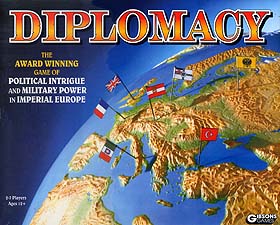
I’m flattered that David Miliband has quoted me in speech on Europe he gave in Poland. The former Foreign Secretary believes that “America’s attention today is on the home front” while China is cautious about asserting itself on foreign policy issues.
So Europe faces a choice. Breathe a sigh of relief that the world is not being carved up by others, and become what Richard Gowan has called a “strategic suburbia: a collection of small, quiet and obsessively inward-looking communities suspicious of the outside world” ; or recognise that nature abhors a vacuum, and move forward into it?
It’s always nice to be cited, and Miliband’s speech is a serious and well-argued plea for “a vision of Europe in the world based on clear ideals, hard heads, and real delivery.” But I have to quibble with his argument that the EU should be trying to fill a global vacuum created by American exhaustion and Chinese caution.
In the piece Miliband cites, published by E!Sharp last month, my case is that EU”s economic woes and its desire for investment from China, India and other emerging powers create the conditions for a “Scramble for Europe”. This would involve the BRICs buying influence in the EU, making it harder and harder for European leaders to develop and defend independent foreign policy positions:
Unless the major emerging economies suffer significant setbacks in the years ahead – by no means impossible – they should have little difficulty dividing and ruling in Europe. It’s possible to imagine a scenario ten years from now in which the UK regularly stands up for India’s interests in the EU while France and Germany speak for China. That won’t be a problem if Sino-Indian relations are stable – but if the two Asian giants are in a state economic or strategic tension, their friends in the EU might also find themselves at odds.
This hardly means that French or British troops will rush off to fight on different sides in a Himalayan war. Yet, as Russia has shown through its energy diplomacy over the last decade, it’s not difficult for outside powers to manipulate individual European governments, making it well-nigh impossible to define coherent EU positions. In 2020, the greatest potentates in Brussels may be the Chinese, Brazilian ambassadors – alongside their U.S. and Russian counterparts – lobbying against each others’ interests.
If European governments coordinate their economic and foreign policies more effectively, they may be able to play the rising powers off against each, balancing India’s influence against China’s or Brazil’s. But EU policy-makers should not imagine that they can somehow rake in cash from Asia and Latin America yet insulate themselves from competition between the emerging powers and the U.S. for global influence.
Strategic irrelevance is not an option. Europe’s ability to shape the outside world may be shrinking, but that doesn’t mean that outsiders will refrain from shaping European politics to suit their needs.
So, whereas David Miliband sees the EU filling a vacuum in global affairs left by the U.S. and China, my concern is that China and other powers will rush in and fill the political-economic vacuum that the EU itself could so easily become…
by David Steven | May 15, 2011 | Economics and development, Europe and Central Asia, Global system, North America
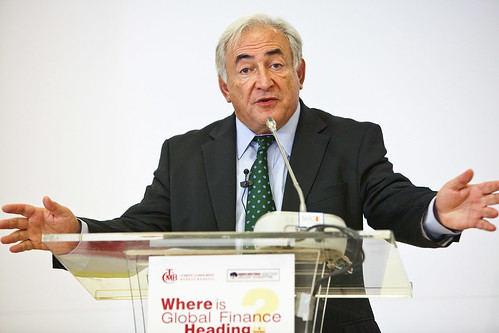
Extraordinary news here in New York where the IMF’s Dominique Strauss-Kahn was this afternoon hauled out of the first class cabin of an Air France plane at JFK airport to be arrested for – allegedly – sexually assaulting the chambermaid in his room at the Sofitel Hotel.
According to the New York Times, Strauss-Kahn fled to the airport after the attack, leaving his mobile phone in his room, but was apprehended just 10 minutes before the plane was due to depart.
Strauss-Kahn, who had been expected to run for French President, was embroiled in a sex scandal back in 2008, when he slept with an IMF employee at Davos, and was then accused of ushering her into a new job outside the Fund. Unlike the World Bank’s Paul Wolfowitz, who was forced out for giving preferential treatment to his partner, Strauss-Kahn kept his job.
Ironically, it was only on Friday that the Guardian ran an article by French journalist, Melissa Bounoua, lauding the open-mindedness of the French voter, who she claimed would happily have Strauss-Kahn as President, even if he were a serial shagger for whom consent wasn’t that big a deal.
Is Dominique Strauss-Kahn, current head of the International Monetary Fund, a “queutard” – literally, a man who makes extensive use of his intimate parts?[…] Strauss-Kahn (widely known as DSK) had an affair with Piroska Nagy, a Hungarian economist, while working at the IMF in 2008…
That wasn’t the only scandal. There was a fuss last year when a young French author, Tristane Banon, described her encounter with him. She explained that she had interviewed him for a book about public figures and their missteps, and claimed she had to fight him off physically…
“Personally, I doubt this side of DSK’s life would have any influence on how he would run the country,” Ms Bounoua claims in an article that makes all the usual excuses for the sexual proclivities of the powerful and is hailed, rather breathlessly, by the Guardian’s Jessica Reed as giving readers “sex, power, politics AND… a new French word: queutard.”
One wonders how Ms Bounoua and the Guardian will react to this new ‘fuss’…
Update: It’s worth remembering that ugly, if unproven, rumours have swirled round Strauss-Kahn for many years. Here’s Felix Salmon – now with Reuters, and one of the best financial journalists around – discussing the Frenchman’s ‘lower half problem’ in 2007 before he took over at the IMF.
Salmon quoted French journalist Chris Masse’s account of a previous Strauss-Kahn ‘fuss’:
A cable TV show (“93 Faubourg Saint Honoré”, on Paris Premiere, hosted by Thierry Ardisson) invited a young (and unknown to me) French actress. I don’t remember her name. She said that she had a bad encounter with Dominique Strauss-Kahn. Here’s what happened. She was asked to come in a little apartment he had in Paris, and then the next thing, Strauss-Kahn jumped on her and tried to undress her and more. She yelled, and told him that that was a rape, but the word “rape” (“viol” in French) didn’t seem to perturb him. She said that he was like “a gorille en rut” (a gorilla in rut).
by Andy Sumner | May 13, 2011 | Africa, Conflict and security, Economics and development, Global system

Some certainly are. This week there’s been a big UN meeting about the world’s poorest countries – the 4th UN conference on the Least Developed Countries (LDCs).
Surprisingly, one Least Developed Country (LDC) is now a high-income country (Equatorial Guinea) and 13 more are now middle-income countries (MICs). However, most of these new MICs are islands with very low populations and poverty remains very high in the LDCs.
The, currently 48 Least Developed Countries has been the group of UN recognized poorest countries (defined as low income; low human assets; economically vulnerable) for forty years and received preferential treatment in trade; development finance and technical assistance and a well-regarded annual report from UNCTAD.
Recent sophisticated estimates of poverty in the LDCs suggests poverty levels (US$1.25 poverty line) have doubled since 1980 from 184m people to about 360m people.
(more…)
