by Alex Evans | Jan 16, 2011 | Africa, Climate and resource scarcity, Conflict and security
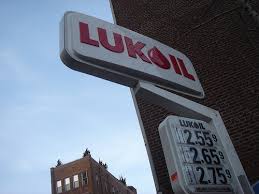
A propos of Richard’s post on how the French used to behave in Cote d’Ivoire, let’s not forget how another member of the Security Council P5 – Russia – is behaving right now. Why, you might wonder, should Russia be blocking moves in the Security Council to step up the international community’s level of intervention in Cote d’Ivoire?
Concerned about implications for its own restive regions, such as Chechnya, Russia has traditionally sought to thwart Security Council actions regarding nations’ sovereignty. But one western diplomat said Russian considerations over Ivory Coast were “90 per cent about oil, 10 per cent about sovereignty”.
Lukoil, Russia’s second biggest oil producer, has stakes in three deep-water blocks off the Ivorian coast, part of a largely untapped 1,000km oil frontier. Lukoil acquired its interests during Mr Gbagbo’s rule and changes of power in Africa have often been followed by reviews of oil and mineral rights.
by Alex Evans | Jan 16, 2011 | What we're watching
[youtube]http://www.youtube.com/watch?v=oLt6wG1xfxQ[/youtube]
by Richard Gowan | Jan 14, 2011 | Africa, Conflict and security, Europe and Central Asia
Last month, I wrote a brief piece over on the ECFR website about France’s lack of leverage in the Ivorian crisis between Laurent Gbagbo and Alassane Ouattara:
France – the former colonial power – has been active in diplomacy in New York. But officials with long memories recall how the French used to behave in Côte d’Ivoire. In 2004, after Ivorian planes attacked French peacekeepers, France destroyed the country’s (small) airforce.
Today, there are still French troops in Côte d’Ivoire, but in smaller numbers than 2004. There have been concerns that a tough line from Paris would lead to violence against French civilians, especially after the Gbagbo camp called Ouattara a French stooge.
The EU had sent monitors to cover the polls, although their operations were marred by death threats. This week, the EU agreed targeted sanctions against Gbagbo’s henchmen and called on him to step down – but the AU, ECOWAS and US are leading on the crisis.
While the Ivorian crisis rumbles on, French diplomats have been struggling to keep up with another crisis in a former colony – Tunisia.
President Zine el-Abidine Ben Ali of Tunisia has left the country amid growing chaos in the streets, French diplomats say, and the prime minister went on state television Friday night to say he is in charge.
A French Foreign Ministry official said authorities did not know where the president had gone, and representatives of the president were not immediately available to confirm the report.
If the French are telling the truth, this is a shameful moment. You can’t just lose a president… What would the men who built the Empire say?
by David Steven | Jan 14, 2011 | Articles, Articles and Publications
Article by David Steven published in World Politics Review on current American foreign policy and what the QDDR could mean. Available from World Politics Review here (subscription required) or download below (January 2011)
Download Article
by David Steven | Jan 14, 2011 | Articles and Publications, Reports
Presentation and report by David Steven created initially for the British Council on the world in 2020, asking how organisations can prosper in what will be a turbulent period for world order. (July 2010)
Download Report
