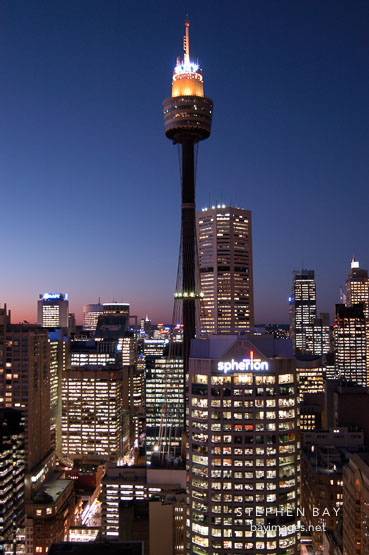
My visit to Australia is impeccably timed. While London is set to bask in temperatures of 21°C this week, it’s cold in Sydney and the forecast looks miserable for the next couple of days. On the upside, unlike Gordon Brown, whose trip to the US was overshadowed by the Pope, his holiness left Sydney this morning, so fingers crossed the crowds will have departed and I won’t have to queue to go up the Sydney Tower.
Over the next ten days I’m in Sydney, Melbourne and Canberra speaking on a range of subjects; from the Self-resilient society (a paper I’m currently writing), to the public value of security as well as on the future of Holistic Government. If you’re interested in what I’m doing you can follow me on Twitter.
One thing I have been told to look out for is a new comedy airing on ABC. The Hollowmen focuses on the workings of the Central Policy Unit, an internal Government think tank. Set up by the Prime Minister, the Unit is charged with developing a “long term policy vision”. Their job is to stop worrying about tomorrow’s headlines – and start worrying about next week’s. Sounds like it could become required viewing.
Via John Robb, a great story about how a local radio station in California became an open source co-ordination hub for disaster response during the California wildfires last year. John explains,
Here’s the problem. When a disaster strikes, widespread distribution of granular/real-time information on the unfolding event can reduce the public’s panic/fear and improve the community’s recovery — as in, solid/well-informed decision making at the individual level is beneficial to fast recovery and public participation in the process can increase information flow and provide real-time feedback on first responder successes/failures. Unfortunately, the public traditionally doesn’t get this detailed information. To the extent that this information exists, it has been reserved for the government’s first responders. In contrast, communications with the general public, either through official pronouncements or the mass media, are usually tardy and typically only provide high-level/generalized coverage.
Fortunately, we are slowly starting to see a shift. New technologies and approaches have made it possible to bring the public into the loop. To illustrate this, blogger Robert Paterson has a two part series on how a small Public TV/Radio station (KPBS) in San Diego, used creativity and some Web technologies (Google maps and Twitter) to become the epicenter of the community’s response to the recent wild-fire disaster.