by David Steven | Feb 2, 2009 | Economics and development, Global system, London Summit
The G20 London Summit in April will be Barack Obama’s first trip to Europe. The Canadians get him first (apparently this is traditional), while the Japanese (who see the G20 as an evil plot to dilute their influence) are hoping for a sneaky bilateral before the big G20 powwow.
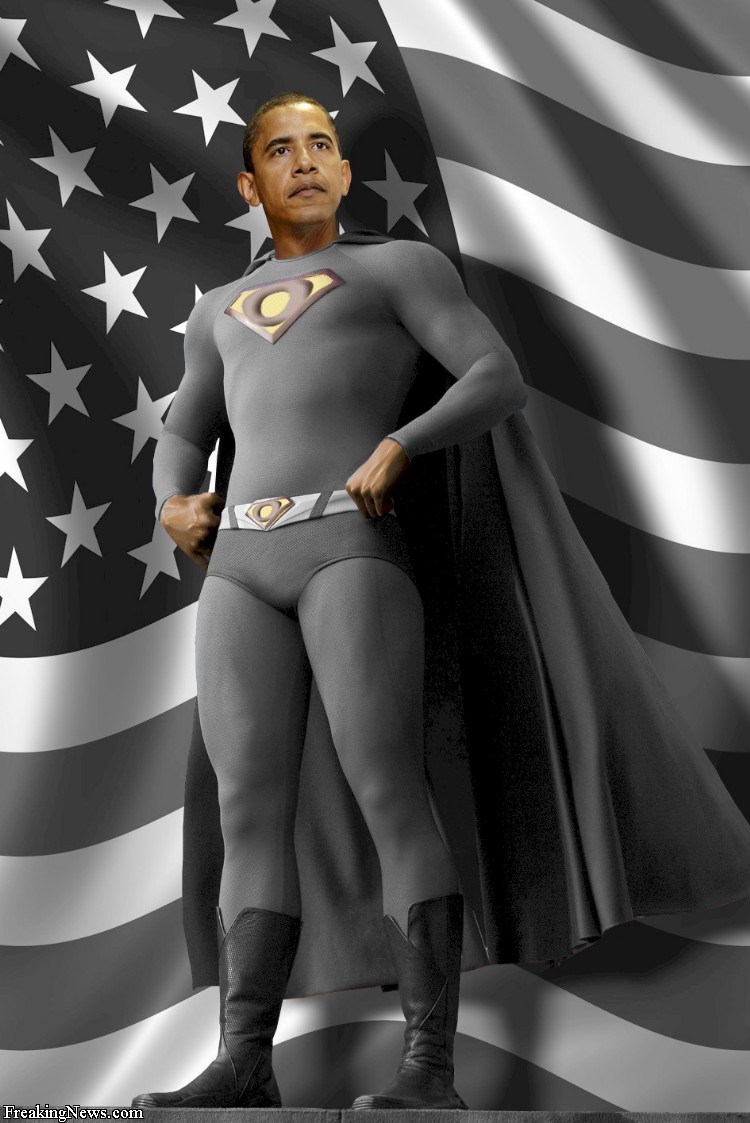
But London will be the big one. Gordon Brown – tired of saving the world on his lonesome – will slip into the role of Robin. Obama will play Batman and kick the world back into shape. The role of Joker is yet to be cast.
But will the summit be a success? The British PM has a lot riding on it, and not just because he believes he can use the event to transform his electoral prospects. We’re in the midst of “the first financial crisis of the global age,” he says, and the best solution is try to bind all the key global issues (economy, trade, climate change, energy, development etc) into a new vision for a “global society”.
“This is not like the thirties,” Brown told a Davos audience (slightly plaintively, perhaps). “The world can come together.” But will it? And more to the point, will Obama reserve sufficient bandwidth to global coordination? Or will he be sucked into further America First policies, as the mess at home hoovers up a growing proportion of his time, energy and political capital?
The past does not dictate the present of course, but the historical precedents are not so good. The nearest equivalent to the London Summit in the thirties was World Monetary and Economic Conference, which was held in the summer of 1933.
This meeting, which bought 66 countries together in last ditch attempt to trigger global economic recovery, was derailed by a new US President – Franklin D Roosevelt – who had recently been elected in a landslide. Roosevelt rejected a compromise deal that had been hammered out by his own delegation.
The result was humiliation for a weakened British Prime Minister, and a furious reaction from the other European nations, led predictably enough by the French. The Germans, meanwhile, were left out on a limb. Hitler – just settling in as Chancellor – was forced to disown his Economic Minister mid-summit. It was an early setback for him on the international stage.
(more…)
by David Steven | Jan 30, 2009 | London Summit, What we're watching
[youtube]http://www.youtube.com/watch?v=W6kOYI753Dk[/youtube]
by Jules Evans | Jan 23, 2009 | Economics and development, Global Dashboard, Global system, London Summit

David Cameron yesterday warned that the UK could be forced to go cap in hand to the IMF, as it did in 1976 under chancellor Denis Healey. (This, by the way, at the launch of a new programme at Demos about ‘progressive conservatism’. Et tu, Demos?)
The question is, would the IMF have the cash. Click on more to read a story I recently wrote for my mag, www.emeafinance.com, which looks at the risk of the IMF running out of money in the next 18 months, and asks what the chances are of it receiving more funds from cash-rich G20 governments (answer: slim).
(more…)
by David Steven | Jan 21, 2009 | Climate and resource scarcity, Economics and development, Global Dashboard, Global system, London Summit
I’ve been in Japan today, speaking at ‘Reforming International Institutions – Meeting the Challenges of the 21st Century’, a seminar organized by the United Nations University and the British Embassy in Japan.
You can download my talk here (with pictures, references etc) – or the text only is available below the jump. There’s a webcast too.
Headlines:
- It’s going to be a tough year. The financial meltdown has a long way to go, and the downturn is risking turning into a global depression.
- Trade is a bell wether. Protectionist pressures are already on the rise. If they gain traction, take that as a warning of a wider loss of confidence in global institutions.
- The unravelling of global economic imbalances could prove corrosive to the international order. If countries start to devalue to protect exports, expect a tit-for-tat dynamic to kick in.
- Scarcity issues (energy, water, land, food, atmospheric space for emissions) remain the key medium term driver of global change. Commodity prices will spike again as soon as there’s recovery.
- The downturn has stemmed the uncontrolled growth of emissions, but also lessened the chance of a robust global deal on climate.
- Economic bad times could well drive increased conflict. A major new security threat might be the fabled black swan – hitting just when the global immune system is already overloaded.
- If we experience a long crisis (or a chain of interlinked crises), we are likely to see either a significant loss of trust in the system (globalization retreats), or a significant increase in trust (interdependence increases).
- You need to stretch time horizons to get the latter – shared awareness (joint analysis of risks and challenges), as a basis for shared platforms (loose coalitions of leaders), which can lobby for a shared operating system (a new international institutional architecture).
- 2009 sets a challenging agenda for the G20 (financial reform and economic recovery – but framed by a broader vision on climate, resources, security etc.)…
- …the G8 (caucus of rich countries able to tee up Copenhagen and kick start development assistance if developing countries begin to teeter)…
- …the UN (especially Ban Ki-Moon’s proposed high level ‘friend’s group’ on climate, but also as a fora for getting to grips with scarcity issues)…
- and the Bretton Woods institutions and the WTO (first of all ensuring they keep their heads above water, then looking to ‘save globalization from itself’).
- Oh and be ready for the backlash – people are angry and rightfully so, but that may well lead us down some populist blind alleys.
(more…)
by Alex Evans | Jan 19, 2009 | Economics and development, Global system, London Summit
Former US Deputy Treasury Secretary Roger Altman has a piece in the new edition of Foreign Affairs on the Great Crash of 2008, which takes the following as its opening premise:
The financial and economic crash of 2008, the worst in over 75 years, is a major geopolitical setback for the United States and Europe. Over the medium term, Washington and European governments will have neither the resources nor the economic credibility to play the role in global affairs that they otherwise would have played. These weaknesses will eventually be repaired, but in the interim, they will accelerate trends that are shifting the world’s center of gravity away from the United States.
(more…)