by Claire Melamed | Nov 14, 2011 | Climate and resource scarcity, Cooperation and coherence, Economics and development, Global system

Sustainable Development: more than just windmills?
A few months ago, the Colombian government created what passed for excitement among international climate and development types, with its proposal for ‘sustainable development goals’. In a paper that is surprisingly short given the talk it’s generated, they proposed a set of goals which, in essence, incorporate the current Millennium Development Goals, but go well beyond them in including a range of possible goals on sustainability and the environment.
At the time, Alex raised a set of important questions here on GD about the what, the who and the how of any future SDGs. And over at CGD, Charles Kenny made a plea for the SDG and the MDG people to start talking to each other to provide some of the substance to underpin these ideas.
And since then? Global negotiations are funny things. In the absence of almost any of the substance that Charles was asking for, and without answers to any of the questions posed by Alex, the SDGs have continued their onward march. Representatives of thirty countries recently met in Bogata to agree some objectives for SDGs, based around reconciling poverty reduction and sustainability.
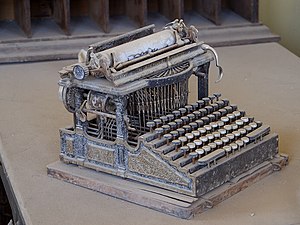
The SDG train has clearly left the station – even though no one really knows what they are. This is a little disheartening for innocent folk like me who like to believe that facts matter (yeah, I know, hopelessly outdated – I may as well be writing this on a Smith-Corona).
Given that no one really knows what SDGs are, but they sound good and people seem to like them, what might they actually be? Where is the meeting ground between environment and development that could form the basis of a set of goals, and what difference would it make to go about things this way?
Putting sustainability into poverty reduction:
If the MDG project has been about putting forward a set of positive things that need to happen for poor people: more money, more health, more education, what are the sustainability goals that could fit into this sort of framework? The things we need more of, from a sustainability and a development point of view, are, among others, more clean energy, more sustainable sources of water, and more food grown in ways that does not irrevocably deplete natural resources. These are things one could imagine putting into a new set of goals to go alongside the more traditional MDG concerns of health, education and income. Some of them, like water, are even in there already, though almost ignored.
So far so good, but the poverty reduction bit is actually the easy bit. (more…)
by Alex Evans | Nov 10, 2011 | What we're watching
[youtube]http://www.youtube.com/watch?v=1G9p7Z0C6w8[/youtube]
by David Steven | Nov 9, 2011 | Economics and development, Global Dashboard
It’s interesting to look back a few years – to when the world was worried that food was too cheap, not too expensive.
In 2004, the UN Food and Agricultural Organization looked back on a long bear market for food: forty years in which real prices of agricultural commodities had fallen 2% per year, or 50% between 1961 and 2002.
Innovation had driven up yields and productivity; growing numbers of suppliers had flooded onto global markets; and subsidies were keeping production levels artificially high. It was good news for consumers, but bad news for farmers and for poorer countries reliant on food exports, where low prices had “battered income, investment and employment.”
In his introduction to the State of Agricultural Commodity Markets 2004, the FAO’s director general, Jacques Diouf, delivered a homily on the chronic oversupply of food. Prices in the mid-1990s were lower than at any time since the Great Depression, he complained, eroding the viability of rural communities and fuelling migration to cities.
There were winners and losers of course, but more of the latter than the former:
The main bene?ciaries of lower food prices have been consumers in developed countries and in urban areas of developing countries.
However, for the vast majority of the world’s poor and hungry people who live in rural areas of developing countries and depend on agriculture, losses in income and employment caused by declines in the prices of the products they market generally outweigh the bene?ts of lower food prices when commodity prices fall.
FAO wanted the problem of oversupply fixed. It called for rich countries to cut subsidies and take land out of production. Poor countries needed to stimulate demand for food, it said, and equip their farmers to export cash crops – preferably processed ones – to the West.
The next State of Agricultural Commodity Markets came out in 2006, by which time the FAO could see that times were a-changing. In real terms, food prices had bottomed out in May 2002, and had jumped 34% by the end of 2005. Good news? Well, no. (more…)
by Alex Evans | Nov 8, 2011 | What we're watching
[youtube]http://www.youtube.com/watch?v=rjOwSIsgE8c[/youtube]
by Richard Gowan | Nov 4, 2011 | Cooperation and coherence, Economics and development, Europe and Central Asia, Global system
The G20 summit in Cannes is over. Here’s a grumpy little post about it that I first published on the ECFR blog this morning:
There’s something a little fraudulent about big international summits. In the run-up to each conference, politicians and pundits promise that they are going to solve the crisis of the day in a single meeting. Sometimes they do. Mostly they don’t. And then they (and you) forget the whole event in a few weeks. Test yourself. Can you remember all fourteen or fifteen summits that have been held on the Euro crisis? Or all the conclaves that have marked supposed turning-points in the Afghan war? Of course you can’t.
But it’s likely that, five or ten years from now, you’ll still have a vague recollection of this week’s G20 meeting in Cannes. Not, sadly, because the assembled leaders will have achieved anything of world-historical significance. Instead, historians will mark this down as the moment that Europe’s weakness on the world stage was laid totally bare.
The EU’s leaders have stumbled into this summit without a credible plan to save the Eurozone. It’s not because they didn’t try. As I note in an article for Política Exterior that was published this week, European politicians saw the summit as an important deadline for ending the crisis:
On 9 October, German Chancellor Angela Merkel and French President Nicolas Sarkozy announced that they were working on a plan to reinforce Europe’s banks and, in doing so finally halt the financial markets’ loss of confidence in the Eurozone. Their goal was to complete this before the Group of Twenty (G20) summit in Cannes on 3-4 November.
The Eurozone’s leaders had been under international pressure to get their act together before Cannes. British Chancellor of the Exchequer had called the G20 meeting a “clear deadline” for the Eurogroup. Other G20 members ranging from Canada to Indonesia had publicly expressed concerns about the Eurozone. For Merkel and Sarkozy, the idea of heading to Cannes empty-handed must have seemed too humiliating to contemplate.
Whoops. Despite their best efforts, Chancellor Merkel and President Sarkozy have been surprised and embarrassed by the Greeks’ failure to fit in with their game-plan. The Euro crisis continues to overshadow the summit, leaving the Europeans present looking silly.
Where the Eurozone goes from here still isn’t clear. But I’m ready to bet that, before long, some commentators will be blaming the whole debacle on the G20 itself. Although President Sarkozy and former British Prime Minister Gordon Brown were early advocates of the G20, a lot of Europeans feel uncomfortable with the forum.
As a whole, the EU’s members have less influence in the G20 than they wield in the G8. At times, the U.S. and the non-Western emerging economies have ganged up on the Europeans in G20 debates, as they did in a dispute over reducing Europe’s political influence the International Monetary Fund (IMF) in the run-up to last year’s G20 summit in Seoul. The Europeans have also worked with China and other rising powers to criticize U.S. policy at recent summits, but they still fear they’re being marginalized.
So is the G20 bad for the EU, as I ask in my Política Exterior piece? Not really. Right now, it’s the EU that’s bad for the EU:
Crucially, the major obstacles to the EU performing effectively within the G20 continue to lie within the EU itself. After the 2009 Pittsburgh G20 summit, for example, the U.S. and other powers gave the EU’s members almost a year to resolve the mechanics of IMF reform themselves. It was only after it became clear that the Europeans could not or would do this that the Obama administration forced them into making hard choices before Seoul.
Similarly, the burst of pressure on the Eurozone to put its house in order this October followed a long period in which European countries had tried to halt the Euro crisis at their own pace. The fact that Euro crisis came to overshadow the run-up to the Cannes tells us more about the deficiencies of decision-making in the Eurozone than in the G20, and EU leaders should not try to distract from their errors by grumbling about the G20.
When I wrote that, I still thought the EU would raise its game sufficiently to get through the Cannes summit in decent shape. It hasn’t. You won’t forget this moment for a while.