by David Steven | Nov 15, 2011 | UK
Over the weekend, Will Hutton offered a ‘modest proposal’ so bizarre that it must have left his colleagues at the Observer fearing for his sanity.
David Cameron, he suggested, should…
… travel to Germany and make a speech in German – however embarrassing – spelling out the choices. If Germany is unprepared to accept them, he should argue that the least bad option is not for Greece to leave the euro – but for Germany, whose economy is strong enough to take the shock, to do so.
He should say that while it was right for Britain not to join the single currency as it was previously constructed, if Germany were to act responsibly, Britain would peg sterling to a reformed euro and in the long run even consider joining the regime. Moreover, Britain would do this either way, he could argue – eventually joining a single currency in which Germany accepted its responsibilities or a single currency without Germany.
Now the idea that Cameron should offer to swap places with Angela Merkel at the heart of the Euro meltdown is, without doubt, genius. The Germans, I am told, feel cursed to stagger on endlessly chained to the corpses of weaker European nations. So… why not help out? Strap them to the UK instead!
But it’s Hutton’s tactics I worry about. Year after year, with consummate skill, he’s been inching [sorry, centimetring] Britain towards Euro membership.
Who can forget his moving plea from ’99 that the UK adopt the single currency because “we read the same bible, drink the same wine, haunt the same discos, play in the same Champions League” as our European neighbours?
Or his reassurances from 2002 that fears the Euro could crack were ‘scaremongering’ and ‘wishful thinking’? Or his masterful solution for the problem of one-size-fits-all interest rates (in a crisis, European countries survive by running up bigger deficits!)?
Or from November 2008, his Cassandra-like insight that only through immediate Euro entry – now, this minute – could the UK avoid ‘national bankruptcy’ and the ‘clutches of the IMF’?
Or perhaps most prophetic of all, his essay from just a fortnight ago, hailing European leaders for taking an ‘inspiring leap’ towards financial stability, by creating “a self-help club” in which every European country could be both strong and free?
But it’s the language thing that makes me fear Hutton is losing his marbles. Our PM may not be able to speak a word of yer’actual German, but he can do a hilarious German accent (this is taught to all boys as part of the British national curriculum). He even whipped it out on the campaign trail:
[youtube]http://www.youtube.com/watch?v=Sp4nwcBgx0A[/youtube]
What’s more, he’s almost certain to push things too far by borrowing a costume from Prince Harry to make his big day in Berlin memorable for all concerned. The likelihood of embarrassment is overwhelming! He’s sure to come across more John Cleese than JFK.
No – what Cameron should do, obviously, is resign forthwith and allow Nick Clegg a fluent German speaker to take over. Clegg could then appoint a government of technocrats to prep the UK for Euro membership. I nominate one Hutton, W as our next Finanzminister….
by David Steven | Nov 15, 2011 | Economics and development
Quote for the day:
The world has been slow to realize that we are living this year in the shadow of one of the greatest economic catastrophes of modern history. But now that the man in the street has become aware of what is happening, he, not knowing the why and wherefore, is as full to-day of what may prove excessive fears as, previously, when the trouble was first coming on, he was lacking in what would have been a reasonable anxiety. He begins to doubt the future. Is he now awakening from a pleasant dream to face the darkness of facts? Or dropping off into a nightmare which will pass away?
He need not be doubtful. The other was not a dream. This is a nightmare, which will pass away with the morning. For the resources of nature and men’s devices are just as fertile and productive as they were. The rate of our progress towards solving the material problems of life is not less rapid. We are as capable as before of affording for everyone a high standard of life—high, I mean, compared with, say, twenty years ago—and will soon learn to afford a standard higher still. We were not previously deceived. But to-day we have involved ourselves in a colossal muddle, having blundered in the control of a delicate machine, the working of which we do not understand. The result is that our possibilities of wealth may run to waste for a time—perhaps for a long time.
John Maynard Keynes – The Great Slump of 1930.
by Claire Melamed | Nov 14, 2011 | Climate and resource scarcity, Cooperation and coherence, Economics and development, Global system

Sustainable Development: more than just windmills?
A few months ago, the Colombian government created what passed for excitement among international climate and development types, with its proposal for ‘sustainable development goals’. In a paper that is surprisingly short given the talk it’s generated, they proposed a set of goals which, in essence, incorporate the current Millennium Development Goals, but go well beyond them in including a range of possible goals on sustainability and the environment.
At the time, Alex raised a set of important questions here on GD about the what, the who and the how of any future SDGs. And over at CGD, Charles Kenny made a plea for the SDG and the MDG people to start talking to each other to provide some of the substance to underpin these ideas.
And since then? Global negotiations are funny things. In the absence of almost any of the substance that Charles was asking for, and without answers to any of the questions posed by Alex, the SDGs have continued their onward march. Representatives of thirty countries recently met in Bogata to agree some objectives for SDGs, based around reconciling poverty reduction and sustainability.
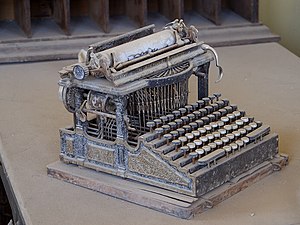
The SDG train has clearly left the station – even though no one really knows what they are. This is a little disheartening for innocent folk like me who like to believe that facts matter (yeah, I know, hopelessly outdated – I may as well be writing this on a Smith-Corona).
Given that no one really knows what SDGs are, but they sound good and people seem to like them, what might they actually be? Where is the meeting ground between environment and development that could form the basis of a set of goals, and what difference would it make to go about things this way?
Putting sustainability into poverty reduction:
If the MDG project has been about putting forward a set of positive things that need to happen for poor people: more money, more health, more education, what are the sustainability goals that could fit into this sort of framework? The things we need more of, from a sustainability and a development point of view, are, among others, more clean energy, more sustainable sources of water, and more food grown in ways that does not irrevocably deplete natural resources. These are things one could imagine putting into a new set of goals to go alongside the more traditional MDG concerns of health, education and income. Some of them, like water, are even in there already, though almost ignored.
So far so good, but the poverty reduction bit is actually the easy bit. (more…)
by Alex Evans | Nov 10, 2011 | What we're watching
[youtube]http://www.youtube.com/watch?v=1G9p7Z0C6w8[/youtube]
by David Steven | Nov 9, 2011 | Economics and development, Global Dashboard
It’s interesting to look back a few years – to when the world was worried that food was too cheap, not too expensive.
In 2004, the UN Food and Agricultural Organization looked back on a long bear market for food: forty years in which real prices of agricultural commodities had fallen 2% per year, or 50% between 1961 and 2002.
Innovation had driven up yields and productivity; growing numbers of suppliers had flooded onto global markets; and subsidies were keeping production levels artificially high. It was good news for consumers, but bad news for farmers and for poorer countries reliant on food exports, where low prices had “battered income, investment and employment.”
In his introduction to the State of Agricultural Commodity Markets 2004, the FAO’s director general, Jacques Diouf, delivered a homily on the chronic oversupply of food. Prices in the mid-1990s were lower than at any time since the Great Depression, he complained, eroding the viability of rural communities and fuelling migration to cities.
There were winners and losers of course, but more of the latter than the former:
The main bene?ciaries of lower food prices have been consumers in developed countries and in urban areas of developing countries.
However, for the vast majority of the world’s poor and hungry people who live in rural areas of developing countries and depend on agriculture, losses in income and employment caused by declines in the prices of the products they market generally outweigh the bene?ts of lower food prices when commodity prices fall.
FAO wanted the problem of oversupply fixed. It called for rich countries to cut subsidies and take land out of production. Poor countries needed to stimulate demand for food, it said, and equip their farmers to export cash crops – preferably processed ones – to the West.
The next State of Agricultural Commodity Markets came out in 2006, by which time the FAO could see that times were a-changing. In real terms, food prices had bottomed out in May 2002, and had jumped 34% by the end of 2005. Good news? Well, no. (more…)