by Alex Evans | Aug 31, 2011 | Global system, Off topic

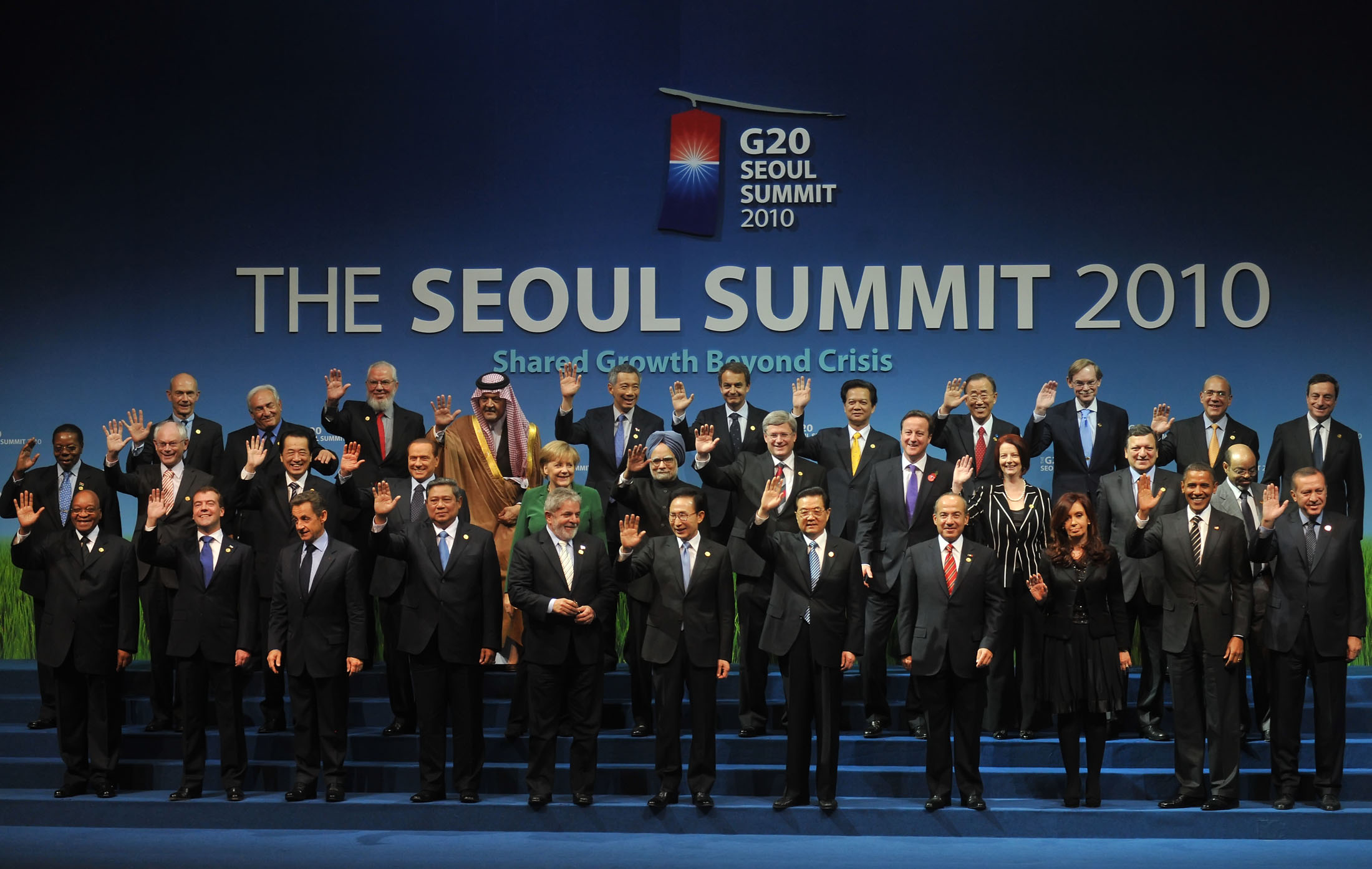
What on earth was with this painfully cringeworthy waving at the Seoul G20? Heavens above – this is supposed to be a summit, not a school outing. If you look closely at the big version (click on photo), you can see that the world’s leaders fall into 4 categories:
1) Those who are waving and – horror of horrors – think that the whole thing is not only acceptable, but great fun. Ban Ki-moon, Silvio Berlusconi, Herman Van Rompuy – fire your PR advisers and get new ones immediately. (Especially you, Van Rompuy – I just had to look you up on Wikipedia to confirm your first name. That’s how much impact you’ve had, that is.)
2) Those who are waving, but dying inside as they do so. Look at Hu Jintao or Recep Tayyip Erdogan. Fellas – we feel your pain, but we’re a bit alarmed that you felt the need to go with the crowd and wave anyway. Your citizens pay you to lead.
3) Those who refuse to wave, but give embarrassed rictus smiles instead. David Cameron and Jose Barroso, you get modest props for not going with the crowd. But those sheepish looks tell a different tale. You pass, but without distinction.
4) Those who not only refuse to wave, but make no secret of their amused contempt for everyone else for going along with what some duff photographer is demanding of them. Meles Zenawi, Angela Merkel, Lula da Silva, Nicolas Sarkozy – we salute you. Go set up a G4 together. You have my vote.
by Richard Gowan | Aug 29, 2011 | Africa, Conflict and security, Cooperation and coherence, Global system, South Asia
Last Thursday, I published a grumpy post over on the blog of the Takshashila Institution, an excellent Indian think-tank. Why was I in a bad mood?
On Friday, India will use its month-long presidency of the United Nations Security Council to convene a discussion on the state of peacekeeping. This is timely, as UN operations have been through a turbulent year, navigating crises in Côte d’Ivoire and Sudan. There is talk of a new mission in Libya. But this meeting is likely to be a bore.
And why did I think that the debate would be a snooze-fest? Demonstrating a remarkable degree of foresight, I guessed that “Security Council diplomats will be thinking of how to beat the traffic from New York to Long Island’s beach resorts once the debate is finished.” Er, no. With Hurricane Irene almost literally on the horizon, everyone was probably wondering when they could go and stock up on bottled water and black truffles, or whatever ambassadors consume during hurricanes.
The debate was also overshadowed by the tragic attack on the UN offices in Nigeria. Nonetheless, a quick read of the summary of the discussions suggests that they were every bit as tedious as I had predicted. Let’s get a quick taster:
Most speakers in the ensuing discussion stressed the continuing importance of United Nations peacekeeping and the need for increased engagement by the partners involved. In that context, many welcomed more regularized consultations with troop- and police-contributing countries and urged continuous improvement in cooperation among all stakeholders. Many also called for innovative thinking in closing resource gaps, particularly in supplying such enablers as helicopters, and in implementing the recommendations of previous peacekeeping reviews.
Enough already! When multiple speakers are highlighting the importance of “implementing the recommendations of previous peacekeeping reviews”, you know that “innovative thinking” is probably in short supply. I’m afraid that I fault the Indian conveners for not shaking up the discussions:
A background paper prepared for the Security Council’s meeting contains a solid but all-too-familiar litany of diplomatic statements about how peace operations are resourced and managed. It fails to grapple seriously with the hardest cases facing the UN or offer a serious framework for resolving them.
As I’ve argued before, peacekeeping is an issue on which New Delhi can show global leadership, but holding debates in New York in which everyone says more or less exactly what they’ve always said isn’t the way to achieve that.
by Andy Sumner | Aug 26, 2011 | Cooperation and coherence, Economics and development, Global system

Foreign aid from ‘new donors’ (aka emerging economies) now makes up around $10bn/year.
And this has doubled in the last five years as the Economist noted last week in a piece on ‘aid 2.0’ triggered by the news that India is to set up its own aid agency with a budget of at least US$1.5-$2bn/year (or triple the annual value of UK aid to India leading to the appearance UK aid is being subcontracted).
One might well ask what if most of the world’s poor live in new donor countries – does it suggest the poor overseas are more deserving than the poor at home?
So, what might aid 2.0 looks like?
One way to take a look is with Chinese foreign aid now that there’s a fascinating dataset on Chinese aid projects (here) that has been painstakingly put together by the Aid Data guys. (By the way a health warning: I am not a Chinese aid expert – read a good read here or the new Chinese government aid white paper here or search Duncan Green’s blog for various China pieces).
The Aid Data dataset of Chinese aid projects covers some 500 Chinese foreign aid projects from 1990-2005 by the year, project description and country recipient and in a very few cases the financial value. For example, in 1991 Chinese aid funded a duck breeding farm in Ecuador breeding 70,000 ducklings a year (wonder if it’s had a Randomised Evaluation yet?).
Of course this is just the project aid declared by the Chinese Ministry of Commerce and data only runs up to 2005 but it makes fascinating reading if you’ve ever wondered what ‘new’ donor’s aid looks like and how different or not it is from ‘traditional’ donors aid (meaning the OECD countries).
So what does Chinese project aid look like based on the Aid Data dataset?
A quick scan suggests: (i) About a half of the projects listed have a direct relation to standards of living via social investments in health equipment or education facilities or via economic growth and production or income generation; (ii) As is well known there’s lots of infrastructure spending (aka aid as concrete) – about a quarter of the projects listed relate to infrastructure – water and power infrastructure in particular; and (iii) Perhaps surprisingly, a quarter or so of all the projects listed relate to leisure and sport – there are numerous new or renovated gymnasiums in Africa (eg Niger, Rwanda and Benin to name a few) and new sports stadiums – one of the biggest being a 30,000 seater stadium in Togo ‘covering an area of 36,000 square metres and including, one Olympic track, an electronic scoreboard, quality pitches and a giant screen’.
So, how different is all this from ‘traditional’ aid or aid 1.0? Much bilateral aid in recent years might well fit into the first grouping of social investments and income generation; some would fit into infrastructure but perhaps less so and probably little ‘traditional’ aid would be leisure or sport related I’m guessing…
And, more importantly perhaps is all of this is probably not where the big money is given the package aid deals of trade and investment from China, the real value probably lies in those non-aid, trade and investment aspects of the deal than in gyms and duck farms (even if they do breed 70,000 ducklings a year which sounds pretty impressive to me).
by Richard Gowan | Aug 25, 2011 | Conflict and security, Influence and networks, North America, Off topic
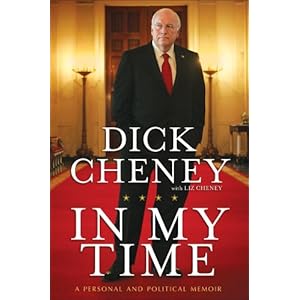 I am an exceptionally excited man. Next week brings the publishing event of 2011: the appearance of Dick Cheney’s memoirs. The NYT has seen an advance copy, and highlights the former Veep’s claim that he advised President Bush to bomb Syria in 2007. Prescient, huh? But it looks like In My Time: a Personal and Political Memoir is going to be utterly jam-packed with enjoyable nuggets:
He [writes] that George J. Tenet, the director of the Central Intelligence Agency, resigned in 2004 just “when the going got tough,” a decision he calls “unfair to the president.” He wrote that he believes that Secretary of State Colin L. Powell tried to undermine President Bush by privately expressing doubts about the Iraq war, and he confirms that he pushed to have Mr. Powell removed from the cabinet after the 2004 election. “It was as though he thought the proper way to express his views was by criticizing administration policy to people outside the government,” Mr. Cheney writes. His resignation “was for the best.”
I literally don’t know what I’m going to do with myself until I get my hands on a copy of this tome. Cheney has predicted that there “will be heads exploding all over Washington” when it comes out. The book is #3 on the Amazon best-sellers list. I only wish that the publishers had picked a more suitable cover design, like this:

by Alex Evans | Aug 25, 2011 | Economics and development, Global system, Influence and networks
[youtube]http://www.youtube.com/watch?v=qOP2V_np2c0[/youtube]