by Mark Weston | Jun 27, 2011 | Economics and development, Europe and Central Asia
Yesterday’s El País carried what to me was an extraordinary story about repossessions of Spanish homes. The recession has seen the number of repossessions in Spain rising to 100,000 per year, but far from suffering for making dumb loans, the country’s mortgage laws allow banks to profit from their clients’ failure to pay.
Repossession policy dictates that if a propert has to be handed over to a bank because its owner cannot keep up with mortgage payments, the bank must endeavour to sell it at auction, and use the proceeds to reduce the amount owed. In the current, stagnant environment, however, nobody is buying, even at repossession auctions, and much of what is on offer goes unsold. Such an eventuality does not perturb the banks, however – indeed, they are probably delighted not to sell – for in the event that a property fails to attract a buyer at auction, the bank gets to keep it for 50% of what it is adjudged to be worth.
Let us say, therefore, that someone has taken out a €100,000 mortgage on a house which at the time the bank judged to be worth €100,000 (many banks, of course, made 100% loans during the boom), and that after paying, say, €10,000 plus interest of that loan the debtor loses his job – not uncommon in a country with 23% unemployment – and can no longer make his monthly payments. The debtor now owes €90,000. The bank tries to sell the house at auction, with a reserve of €75,000 (the Bank of Spain says official house prices have fallen 17%, and the bank knocks off a bit extra to make it look like it is keen to sell). Nobody is interested. The house goes unsold. The bank acquires the house for €41,500 (50% of the official value of €83,000), and the debtor, who is now homeless and jobless, still owes it €48,500, plus interest.
It won’t have escaped your notice that this is a remarkably good deal for the bank. First, it received €10,000 plus plenty of interest – let’s estimate a further €10,000 – from the hapless debtor before he lost his job. Second, it is still owed nearly €50,000 plus interest. And third, it has acquired a house worth perhaps €60,000 (if we ignore the overoptimistic official figures) for just over $40,000. Even if the debtor now does the sensible thing and tells the bank where it can put the rest of the debt, therefore, the bank will have lost just 20% of the loan. Most debtors, however, will not be so bold, and will attempt to pay back the rest of the loan for fear of losing their hard-won creditworthiness. In the latter cases, the bank will have made a profit on the original €100,000 loan of €20,000 plus several additional tens of thousands in interest, so unless significantly more than half of debtors tell the bank where to go it cannot lose on these deals.
Of course, the above example is theoretical and the actual figures are likely to vary somewhat – the bank might sell the house for €70,000, adding another ten grand to its haul, and there are costs of selling to account for too. But unless I have miscalculated it does not seem too far-fetched. Under the current policy, banks benefit by making bad loans. Since most people will try to pay back the loan even though they no longer own their property, banks can easily withstand a few bad debtors, and it is not surprising in an industry where profit rules that their vetting policy is less than rigorous. A couple of commentators in the El País article recommend raising the 50% of the value at which the bank acquires the property to 70% – this would seem a bare minimum to avoid the moral hazard created by the current law. The protesters in the 15-M movement rightly blame the banks for causing the housing crisis, but where policy puts them in a no-lose situation it is inevitable that many will take advantage.
by Richard Gowan | Jun 24, 2011 | Cooperation and coherence, Economics and development, Global system, Influence and networks, North America
Development guru Jeffrey Sachs really, really likes Ban Ki-moon:
The world can breathe easier with the reelection this month of United Nations Secretary-General Ban Ki-moon to a second term in office. In a fractious world, global unity is especially vital. During the past five years, Ban Ki-moon has embodied that unity, both in his unique personal diplomacy and in his role as head of this indispensable global organization.
That’s not, let’s be honest, a universally-held view. Here’s Jim Traub of the NYT, interviewed by the BBC:
“Kofi Annan, by virtue of who he was and what he said, was able to make the UN a more important-feeling place,” says Mr Traub, “and I think people around the UN would say that Ban, by who he is and what he says, has made the UN a less important-feeling place.”
That’s not how Jeffrey feels:
During a recent trip with Ban to Egypt and Tunisia, I watched in awe as he deftly backed the democratic changes underway in those two countries while simultaneously dealing with many other upheavals in the region. Ban generously and inspiringly offered his support to the brave youth leaders in both countries who are at the forefront of the political changes set in motion this year.
Feel the love.
by Richard Gowan | Jun 24, 2011 | Europe and Central Asia, Influence and networks, Off topic

And this week’s prize for healthy democratic debate goes to… Kazakhstan!
A Kazakh weekly newspaper is facing calls for its closure over a crossword clue critics say was insulting to the Kazakh nation, RFE/RL’s Kazakh Service reports.
The row is over a crossword in the May 26 issue of the Russian-language “Stepnoi Mayak” (Steppe Lighthouse) newspaper in the northern city of Kokshetau.
The offending clue asked, “Name the house of a Kazakh street bum.” The answer was given as “yurt,” the traditional home of the nomadic peoples of Eurasia, including Kazakhs.
The crossword sparked a series of protests in Kokshetau and other Kazakh cities.
The chairman of the Bolashaq (Future) movement, Dauren Babamurat, told RFE/RL that the newspaper should be closed as it compared Kazakhs with street bums. Babamurat added that such a harsh punishment would be a lesson for other newspapers in Russian in Kazakhstan.
by Alex Evans | Jun 24, 2011 | Climate and resource scarcity, Economics and development
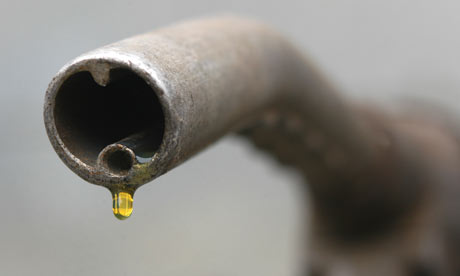
Javier Blas is interesting this morning on why the International Energy Agency took its surprise decision yesterday to release emergency oil stocks – only the second done it’s done so in its history (the first two being the 1991 Gulf War and Hurricane Katrina). He reckons that:
Conspiracy theorists are having a field day, but I think that the release is ground of simpler facts: the loss of Libya production for longer than anticipated, the surprising robustness of oil demand growth in China, India and Saudi Arabia, and, yes, the evident impact of high oil prices on economic growth in developed countries.
Add to that a new view in Washington and at the IEA’s headquarters in Paris of the strategic reserve as a smart bomb, to be used in the event of small oil output disruptions, rather than a nuclear option, to be used only as last resort, and the release makes sense.
Does it make sense, though? The IEA’s emergency stocks mechanism was built to respond to short-term, sudden-onset shocks. But if (as Javier argues), Libya’s oil production is “not going to recover any time soon”, and emerging economy demand for oil is proving notably robust, then that’s not a shock at all. It’s structural.
And if it’s structural, then how does releasing stocks solve anything? As the Economist’s US politics blog notes this morning, the entire US Strategic Petroleum Reserve (from which half the IEA release is being sourced) is only 727m barrels: 38 days’ supply for the US, or 9 days for the whole world. You could use the whole lot, but you’re still not affecting the basic supply and demand balance.
To be sure, the emergency release will make life a bit easier in the short-term for politicians in oil-importing countries. But if that’s all there is to it, then how is this any different from all the other perverse subsidies for oil consumption even as oil is becoming more scarce – and how does it square with the G20 commitment to eliminate such subsidies?
by Richard Gowan | Jun 23, 2011 | Africa, Economics and development, Off topic
A new threat to the United Nations is reported in Swaziland:
A United Nations Development Programme (UNDP) worker was terribly shaken and emotionally moved when her boyfriend gifted her with snakes in a beautiful present wrapper.
The hair-raising incident took place at the UNDP offices in Mbabane sometime last week. The lover of the UNDP worker came to present his girlfriend with two snakes and a lizard. The gentleman went to the offices and left the present to her lover. The man is alleged to have quickly delivered the gift and departed soon.
Jubilantly and eagerly, the lady opened the gift bag only to find two dead snakes and a lizard. The lady was too shocked and threw the gift down and screamed. Other UNDP workers quickly responded to find out what was the matter. They were also astonished to find the ‘gift’ snakes.
Senior staff members are said to have intervened. The security took away the snakes. According to sources, a well-dressed decent man arrived at the offices looking for his girlfriend, who work in the company. The innocent-looking man was carryinga beautiful gift wrapper. The security allowed him to enter, our sources revealed.
Yikes. On the plus side, this sounds like an excellent basis for a low-budget sequel to that 2006 Samuel L. Jackson classic “Snakes on a Plane”, featuring the immortal line “Enough is enough! I have had it with these motherfucking snakes on this motherfucking plane!” Come on, just say it out loud: “I have had it with these motherfucking snakes in this motherfucking UNDP office!” Movie gold.
