by Alex Evans | Jan 26, 2011 | Economics and development
Over at Brookings, Laurence Chandy and Geoffrey Gertz have just published an interesting new paper (pdf) on the state of global poverty. Among its generally upbeat findings:
Between 2005 and 2010, the total number of poor people around the world fell by nearly half a billion people, from over 1.3 billion in 2005 to under 900 million in 2010.
Poverty reduction of this magnitude is unparalleled in history: never before have so many people been lifted out of poverty over such a brief period of time. Furthermore, the first Millennium Development Goal target – to halve the rate of global poverty by 2015 from its 1990 level – has already been met, approximately three years ago. And based on our projections, by 2015, we will not only have halved the global poverty rate, but will have halved it again.
The authors also find that from 2005 to 2015, “Asia’s share of global poverty is expected to fall from two-thirds to one-third, while Africa’s share more than doubles from 28 to 60 percent” (though they also note that Sub-Saharan Africa’s poverty rate has now fallen below 50 percent for the first time, and should fall below 40 percent by 2015—something China didn’t manage until the mid-90s).
The immediate thought that occurred to me was: if poverty becomes increasingly concentrated in Africa, does that contradict Andy Sumner’s findings about poverty being increasingly concentrated in middle income countries? Answer: no. In fact, the authors say explicitly that their analysis verifies Andy’s findings. But they also add that 2009 marked a low point for concentration of poverty in low income countries (with 33.4% of poor people living in them) – and foresee a gradual rise back up to 44.9% of poor people living in LICs by 2015 (see graph below).

(Wondering what the hell happened in 2007? India graduated to Middle Income Country status.)
by Arjan van Houwelingen | Jan 25, 2011 | Conflict and security, Middle East and North Africa

It’s over. The peace process that never really was a true effort to find peace has now been exposed to have died a slow death. The two-state solution has been dealt a final blow and is, as John Cleese would say, an ex-solution.
This is the main, somewhat knee-jerk, thrust of reactions in the Middle East to the publication of the so-called Palestine Papers by Al Jazeera and the Guardian. Most Israeli and Palestinian commentators seem to agree: Israel never really wanted a deal (or was politically capable of it); the Americans sided with Israel, the status quo continuing to be its preferred political option; and the Palestinian leadership grew so frustrated and disinterested that they proved willing to betray the trust of the people they were supposed to represent.
As we move further away from Jerusalem though, reactions appear to be more upbeat. The cynical views is that ‘these Palestine Papers reveal nothing that we didn’t already know’, while the optimists cheer that now that the truth is out, real action must follow. Typically, the US State department spokesman dismissed the leaked documents as “not conducive to bringing the parties back to the negotiating table”. William Hague, meanwhile, apparently missed the leaks altogether as he met with his Israeli counterpart, Avigdor Lieberman and noted that settlement building is illegal (an argument that, given Lieberman’s political views, is probably about as futile as telling a pyromaniac that fire is bad while giving him a box of matches).
The Guardian’s editors seem to have difficulty making up their minds. Yesterday, they appeared apologetic – suggesting that it would require Panglossian optimism to believe that the negotiations could one day be resurrected. Today, they are patting themselves on the back, claiming that by exposing “how and where this deal fell short, is not to undermine the goal. It is the only way left of rescuing it.”
Having worked for eight years as a small cog in the vast diplomatic machine that is the Middle East peace process, I cannot help but smile at the hoopla that these leaks have caused. But in my heart of hearts, I’d have to agree with the cynics. The Palestine Papers may provide great detail and indeed shock even some of those closely involved in the process as to the extent of the concessions Palestinian negotiators were willing to make, but in essence they don’t really tell us anything new. There may, at some stages, have been a genuine desire for peace on all sides but it should be clear to most of us now that there has never been the political need. (more…)
by Richard Gowan | Jan 25, 2011 | Influence and networks, North America, Off topic
Back in June 2008, I wrote a chirpy but snooty post about the Putnam County News and Reporter, a very old-fashioned newspaper in upstate New York with headlines like “Sloop Club Strawberry Festival Serves Up Shortcakes and Sails”. Not long afterwards, a Putnam County resident got in touch to accuse me of trafficking in “negative snark” about a region I didn’t understand. And, on consideration, I decided he was right and wrote a post saying sorry. The following month, I noted that the News and Reporter had been bought on a whim by Roger Ailes, Chairman of Fox News, who had just moved upstate. I quoted this short report on the subject:
The paper will “probably stay the same,” said Elizabeth Ailes, Mr. Ailes’s wife, who will be the publisher. “We bought it not to change it, but perhaps it will evolve over time.”
To readers, the change may be imperceptible. “It’s a really quaint paper,” Mrs. Ailes said by phone. “It reflects the community. We really like it, and that’s why Roger wanted to buy it.”
Then, gripped by some sort of mystic premonition, I added this:
I’d watch out if I were you, Mr. and Mrs. Ailes – this blogger found that the citizens of Putnam County don’t take being called “quaint” lightly…
And then I thought nothing of the matter, until I picked up the latest New Yorker – and found a lengthy article about how Ailes has scandalized many of his neighbors by using the paper to criticize Obama, condemn local teachers and promote popery… and how some readers and local journalists took umbrage and fought back. In fairness, the article (sadly only available in print or to online subscribers) concludes that the charges against Ailes are all a bit over-hyped. But, well, what can I say? Global Dashboard saw it all coming long, long before Fox or the New Yorker!
by Alex Evans | Jan 25, 2011 | Economics and development
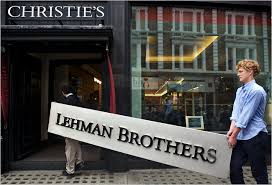
The opening lines of a Business Week article from 12 June 2006:
On the 31st floor of a skyscraper overlooking Times Square one recent spring day, a dozen or so of Lehman Brothers Inc.’s top executives filed into a conference room to run through risks, relive past financial crises, and worry about new ones. They analyzed how much money the firm might lose if the markets were buffeted like they were after the terrorist attacks of 2001. They pored over complicated risk models showing how tens of thousands of trading positions and financial contracts with clients would fare in the event of an Avian flu epidemic. They tested all conceivable scenarios that might put Lehman in harm’s way. “We are in the business of risk management 24/7, 365 days a year,” says Chief Administrative Officer David Goldfarb.
Tell us more, do.
by Alex Evans | Jan 25, 2011 | What we're watching
[youtube]http://www.youtube.com/watch?v=DlExLpFZfwA[/youtube]
