by Richard Gowan | Mar 30, 2010 | Conflict and security, East Asia and Pacific, Europe and Central Asia, North America, Off topic
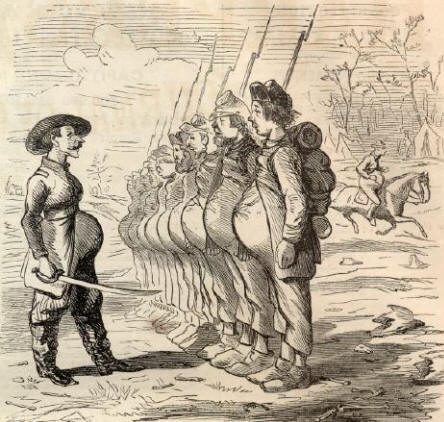
The BBC reports that U.S. forces may soon be slimmer targets for Taliban snipers:
Burger bars and pizza joints in Nato bases across Afghanistan are being closed down in an effort “to increase efficiency across the battlefield”. A Nato spokesman said that “amenities” at bases across the country are being phased out for logistical reasons. He said officials at each base will decide exactly when they are axed.
Nato’s top Afghanistan commander, Gen Stanley McChrystal, made it clear last year that the days of Burger King and Pizza Hut on bases were numbered. He expressed concern that burger bars, pizza restaurants and other stores in large International Security Assistance Force bases at Kandahar, Bagram and Mazar-e-Sharif served as a distraction to the military mission.
That may sound like common sense, but McChrystal’s stand against military obesity may be as doomed as Custer’s against the Sioux. A recent humor piece in the New Yorker drew attention to this remarkable news story from last December:
The latest Army statistics show a stunning 75 percent of military-age youth are ineligible to join the military because they are overweight, can’t pass entrance exams, have dropped out of high school or had run-ins with the law. So many young people between the prime recruiting ages of 17 and 24 cannot meet minimum standards that a group of retired military leaders is calling for more investment in early childhood education to combat the insidious effects of junk food and inadequate education.
“We’ve never had this problem of young people being obese like we have today,” said Gen. John Shalikashvili, former chairman of the Joint Chiefs of Staff. He calls the rising number of youth unfit for duty a matter of national security. “We should be concerned about how this will impact this overstretched Army and its ability to recruit.”
So, are we fated (fatted?) to defeat at the hands of meaner, leaner foes? Not if we choose to pick a fight with China, according to the latest edition of Foreign Policy. It notes that China’s one-child-per-family policy “is widely perceived as creating a generation of spoiled, overweight boys, dubbed ‘little emperors’, who are doted on by four grandparents while their parents toil to support them in fields, factories, and offices.” The result: soldiers who resemble first-year undergraduates!
The [Chinese Army] has found that such soldiers have better communication and computer skills than their peers with siblings. However, they haven’t performed as well in other ways. Only-child recruits are not as tough; they don’t like to go through the pain of intense training; they call in sick more frequently; and they struggle to perform some simple chores like doing their own laundry.
Is this the shape of future war: no more mass armies, just massive soldiers?
[Picture credit: Son of the South.]
by David Steven | Mar 29, 2010 | What we're watching
[youtube]http://www.youtube.com/watch?v=5erjj6aS5Ws[/youtube]
by David Steven | Mar 29, 2010 | Europe and Central Asia, North America
Lots of protestations from European leaders that they really can be credible partners for the United States:
Stung by a perception of America’s indifference to its historical alliance with Europe, senior European leaders are calling for a rebalancing of the relationship, promising the Obama administration that the Europeans can be partners for global challenges ranging from security to climate change.
A high-level conference here on Sunday was dominated by European efforts to get Washington’s attention, with promises of new, concerted action that were met with polite skepticism. American officials and European experts largely see European national leaders as focused on their own debates about Greece and the debt crisis afflicting the group of countries that use the euro, divided over China and Russia and tired of Afghanistan. Europe is seen just now as not a problem for the United States, but not much help, either.
But the European message here was striking, both as a response to criticism from Washington and as an effort by Europe’s new leadership, put in place under the Lisbon Treaty, to articulate a new foundation for an old relationship that most take for granted.
The European Commission president, José Manuel Barroso, urged Europeans to “think global and act trans-Atlantic.” After President Obama’s postponement of a European Union-United States summit meeting, which caused resentment in Europe, Mr. Barroso, speaking to the conference here, the Brussels Forum of the German Marshall Fund, called for future summit meetings to be more substantive, less scripted and “much more efficient and results-oriented.”
The new president of the European Union, Herman Van Rompuy, said it was vital “to translate this shared history and our shared values into a shared future.” Both Europe and the United States “are entitled to ask the other: ‘What do you bring to the table?’ ” he said. “The only easy relationship is an empty relationship.”
I am all in favour of the Obama administration ignoring the European Union when it is divided and/or inward looking. But will the Americans create positive incentives for unity, by working hand-in-hand with the EU when it caucuses effectively on a global issue, and invests energy and resources in trying to reach agreement?
In the past, this has not been the case – think Copenhagen. Indeed, my impression is that many US policy makers instinctively (and perhaps unconsciously) prefer to see Europe weak and marginalised. In the future, a policy of divide-and-ignore needs to be replaced by one of notice-when-united.
by Michael Harvey | Mar 26, 2010 | Conflict and security, Cooperation and coherence, Economics and development, Europe and Central Asia, Influence and networks, North America, UK
– With the US and Russia finally concluding negotiations on a new nuclear arms reduction treaty, Julian Borger assesses the deal’s significance. Josh Rogin, meanwhile, wonders whether Obama will be able to get the treaty past Republicans in the Senate.
– Kenneth Weisbrode explores the “reinventing diplomacy” debate, suggesting that “while America thinks in terms of networks, the rest of the world is busy connecting circuits.” Writing in The World Today, Christopher Hill assesses the current challenges facing UK foreign policy, the difficult decisions that lie ahead, and where future priorities may lie. “If it is to serve us well over the longer term”, he argues, UK foreign and security policy “needs a radical overhaul of its underlying outlook”.
– Elsewhere, The Atlantic Monthly‘s Joshua Green offers a wide-ranging profile of US Treasury Secretary, Timothy Geithner – “a superstar of the bureaucracy” – assessing his influence on President Obama and his central role in shaping the US response to the global financial crisis.
– Finally, discussing European immigration Brigid Grauman highlights the example of Switzerland, suggesting that the rest of Europe would do well to learn the lessons of participatory democracy in promoting integration and fostering multiculturalism. Over at Foreign Policy, meanwhile, Steve Kettmann assesses the recent buffeting taken by the country’s international image, asking if the Swiss stance on neutrality is still feasible in an age of interconnectedness.
by Michael Harvey | Mar 26, 2010 | What we're watching
[youtube]http://www.youtube.com/watch?v=i2wGxK1Thco[/youtube]
