by Richard Gowan | Aug 13, 2010 | Conflict and security, North America, Off topic
How do you get your kids out of baby blue bonnets and into manly blue helmets? Send them to summer camp in Harrietsville, Ontario, that’s how:
The rope bridge wavers and wobbles as Devlin Coughlin makes his way across it and over a dried-out stream bed. Back on solid ground, the 12-year-old boy grins as he’s helped from his safety harness.
“Now imagine doing that as a soldier with your rucksack and 150 pounds of gear,” says Chris Farrish. It might be a stretch for Devlin to get his head around that idea. But not for Farrish. After serving 20 years in the Canadian military, including a stint in Afghanistan in 2007, Farrish knows a thing or two about the skills that soldiers need to survive.
And that’s exactly what Farrish and co-director George Myatte, who served in the first Gulf War and Bosnia, are trying to impart to the young people here at their Adreniline Rush Youth Adventure Camp.
Shouldn’t that be “Adrenaline”? Still, the Rush sounds rather fun…
For the past two weeks, about 20 young people ages 12-17 have been learning the ropes (sometimes literally) at Adreniline Rush. The camp is situated at Peacekeeper Park, a registered charity that honours the work of Canadian peacekeepers with programs and facilities, including an outdoor “path of honour” featuring educational plaques about Canada’s peacekeeping heritage.
That pariotic [sic] theme is evident everywhere. The four walls of the mess hall, for instance, are lined with more than 150 photographs of Canadian soldiers killed while serving in Afghanistan or with peacekeeping missions. “It gives them a taste of some of the sacrifices that were made so they can appreciate what they have,” says Farrish.
Farewell, childish innocence, farewell.
by Richard Gowan | Aug 11, 2010 | Conflict and security, Europe and Central Asia, Off topic


What do the four people above have to learn from the four below?
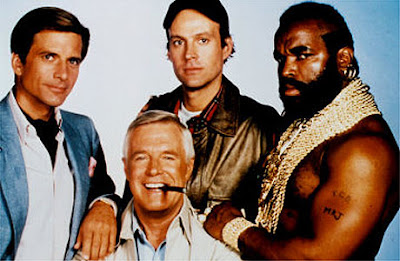
I pity the fool that does not find out the answer here (OK, it’s just a link to another article about the EU and crisis management, but a blogger has to try…).
by Richard Gowan | Aug 11, 2010 | Africa, Conflict and security, Cooperation and coherence, East Asia and Pacific, Europe and Central Asia, Global system, North America, South Asia
Michael Mandelbaum summarizes his new book, Frugal Superpower, for The New Republic. From now on, “the United States will have far less to spend on foreign policy because it will have to spend far more on other things.” What does that mean?
The government will still have an allowance to spend on foreign affairs, but because competing costs will rise so sharply that allowance will be smaller than in the past. Moreover, the limits to foreign policy will be drawn less on the basis of what the world needs and more by considering what the United States can–and cannot–afford.
In these circumstances, the public will no longer feel able to afford, and so will not support, operations to rescue people oppressed by their own governments and to build the structures of governance where none exists. Interventions of this kind, which the United States has undertaken in the last two decades in Somalia, Haiti, Bosnia, Afghanistan, and Iraq, will not be repeated. The American defense budget will come under pressure, and so, too, therefore, will the missions that the defense budget supports: the American military presence in Europe, East Asia, and the Middle East.
Here the impact of the coming economic constraints on foreign policy will differ from the effects of the downsizing of the financial industry. Reducing the size of banks and other financial institutions will have benign consequences, reducing the risk of a major economic collapse, limiting economically unproductive speculation, and diverting talented people to other, more useful, work. By contrast, the contraction of the scope of American foreign policy will have the opposite effect because the American international role is vital for global peace and prosperity.
The American military presence around the world helps to support the global economy. American military deployments in Europe and East Asia help to keep order in regions populated by countries that are economically important and militarily powerful. The armed forces of the United States are crucial in checking the ambition of the radical government of Iran to dominate the oil-rich Middle East. For these reasons, the retreat of the United States risks making the world poorer and less secure, which means that the consequences of the economically-induced contraction of American foreign policy are all too likely to be anything but benign.
Where do we go from here? Last month, I wrote an op-ed for Global Europe in which I argued that while the U.S. and EU are suffering in the current economic environment, they’re not alone. Russia is also feeling the pain – as Alistair underlines in his recent post – and has moderated its foreign policy as a result. China and India enjoy stellar growth and are willing to challenge the U.S., especially in their backyards. But their ability to project long-range military power remains limited for the time being.
All the rising powers are increasing defence spending, while European military cost-cutting will likely continue well beyond the immediate downturn. But for now, we are in a moment when everyone looks weak. If the U.S. and its NATO allies are wary of projecting power, the big emerging economies still have limited reach.
In some ways, this is rather nice. Great power confrontations are not impossible, but are still relatively improbable. Yet this era of weakness also bring risks. The most obvious are in the Middle East. With the U.S. gradually pulling back from the region, a breakdown in Iraq or spillover of violence from Afghanistan could create endemic instability. Israel, uncertain of U.S. support, has become increasingly hawkish. State failures and civil wars will continue to bubble from Sudan to Central Asia. If the Afghan experience has convinced many that interventionism is foolish, ignoring these crises is dangerous. Remember why we went into Afghanistan in 2001.
Containing new crises will be difficult. Instead of Bush-era “coalitions of the willing”, it may be necessary to form “coalitions of the weaklings”: groups of states that can’t handle international problems alone, but have sufficient leverage between them to do something.
“Coalitions of the weaklings” may sound snappy, but what will they look like and what will they achieve? The rather rickety international alliances put together to deal with Iran and North Korea aren’t exactly inspiring models for future cooperation. Nor is the Sino-US-AU-EU arrangement for dealing with Sudan likely to excite idealists… plus such coalitions are also hard to stick together and sustain. In a recent piece for World Politics Review (subscription required) Bruce Jones and I came to this conclusion:
In the future, resolving looming conflicts will more often than not involve convening highly complicated — and inherently unstable — coalitions of governments to put pressure on potential combatants. Regional organizations, like the African Union and Organization of American States, also have leverage. But who will do the convening?
Sometimes, the U.S. will still take the lead, or else regional powers will do so. But in many cases, the competing interests involved in a crisis will preclude a single state from orchestrating mediation. In such instances, the task of leading talks — or backing up local actors with better political contacts to do so — may fall to a much-maligned actor: the United Nations.
A prospect that will fill you with hope or dread, depending on your convictions…
by Richard Gowan | Aug 7, 2010 | Conflict and security, Cooperation and coherence, East Asia and Pacific, Global system, North America
Daniel Drezner is rightly intrigued by a new essay by Thomas Wright of the Chicago Council on Global Affairs on shifts in the U.S. approach to China. Wright argues that the Obama administration, having courted Beijing, was shocked by the response:
Instead of accepting the offer of a full partnership, China became far more antagonistic and assertive on the world stage. It expanded its claims in the South China Sea, engaged in a major spat with Google over Internet freedom, played an obstructionist role at the climate change negotiations in Copenhagen, regularly and openly criticized US leadership, and, sought to water down sanctions against Iran’s nuclear programme at the UN Security Council.
This is familiar. But Wright probes the effects of Beijing’s hawkishness:
More than any other development, China’s increasing assertiveness revealed a fundamental flaw in the Obama administration’s worldview—that although multilateralism is needed more than ever, emerging powers (and not just China) will often define their interests in ways that conflict with US interests and they will continue to engage in traditional geopolitical competition with the United States.
So what does this mean for US foreign policy? The United States is likely entering a geopolitical period unlike any it has faced before. Americans are used to countries being friends or enemies—for us or against us (something that fit 20th century realities almost perfectly). But relations with China will be a peculiar blend of cooperation and rivalry, meaning the US will be faced with a more competitive world than it has over the past 20 years (although unlike the Cold War, it will be a competition within limits, between interdependent powers, and with plenty of potential for cooperation).
Such unprecedented developments have also sparked a vital debate inside the Obama administration about how to respond, and how best to preserve the liberal international order created at the end of World War II.
On the one hand are those who wish to persist with cooperative strategic engagement so the international order is run by a concert of powers, with the United States and China at its heart. On the other are those who believe that, even as they cooperate, relations between the United States and emerging powers will be far more competitive and prone to limited rivalry than relations between members of the old Western order, meaning the United States will have no choice but to compete with emerging powers to shape the international order while maintaining a geopolitical advantage over its competitors.
If the China policy is an early test case, then it shows a tilt toward competitive strategic engagement. The question now is whether this approach will stick and gradually spread to influence the president’s overall grand strategy.
It’s back, as I argued earlier in the year, to realism.
by Richard Gowan | Aug 6, 2010 | Climate and resource scarcity, Cooperation and coherence, Global system, North America, Off topic

Look at the picture above. What do you see? A public bicycle rack in Denver. But look closer. It’s really a terrifying plot to make Americans submit to the tyranny of the UN!
Colorado Republican gubernatorial candidate Dan Maes is warning voters that Denver Mayor John Hickenlooper’s policies, particularly his efforts to boost bike riding, are “converting Denver into a United Nations community.”
“This is all very well-disguised, but it will be exposed,” Maes told about 50 supporters who showed up at a campaign rally last week in Centennial. Maes said in a later interview that he once thought the mayor’s efforts to promote cycling and other environmental initiatives were harmless and well-meaning. Now he realizes “that’s exactly the attitude they want you to have.”
“This is bigger than it looks like on the surface, and it could threaten our personal freedoms,” Maes said.
How so?
Maes said in a later interview that he was referring to Denver’s membership in the International Council for Local Environmental Initiatives, an international association that promotes sustainable development and has attracted the membership of more than 1,200 communities, 600 of which are in the United States. Denver became a member of the group in 1992, more than a decade before Hickenlooper became mayor. Eric Brown, the mayor’s spokesman, said the city’s contact with ICLEI “is limited.”
Still confused?
Maes said ICLEI is affiliated with the United Nations and is “signing up mayors across the country, and these mayors are signing on to this U.N. agreement to have their cities abide by this dream philosophy.”
The program includes encouraging employers to install showers so more people will ride bikes to work and also creating parking spaces for fuel-efficient vehicles, he said.
Polls show that Maes, a Tea Party favorite, has pulled ahead of former Congressman Scott McInnis, the early frontrunner in the Aug. 10 primary for the Republican gubernatorial nomination. Maes acknowledged that some might find his theories “kooky,” but he said there are valid reasons to be worried. “At first, I thought, ‘Gosh, public transportation, what’s wrong with that, and what’s wrong with people parking their cars and riding their bikes? And what’s wrong with incentives for green cars?’ But if you do your homework and research, you realize ICLEI is part of a greater strategy to rein in American cities under a United Nations treaty,” Maes said.
Personally, I’m not convinced the UN is out to end American sovereignty. But it’s an interesting question: would you sacrifice a modicum of sovereignty in exchange for an office-mate who showered properly?