Stop Betting the House talk
Talk given by David Steven at Gresham College on risk and resilience in the UK housing market, as part of a Long Finance Roundtable meeting (March 2010)

Talk given by David Steven at Gresham College on risk and resilience in the UK housing market, as part of a Long Finance Roundtable meeting (March 2010)
[youtube]http://www.youtube.com/watch?v=fQ8OYtQjoL8[/youtube]
Among the many, many gems in Andrew Rawnsley’s gripping new book on Labour’s last two terms of office, students of resilience will especially enjoy his account of how the British government actually worked during 9/11. It emerges that:
– Tony Blair’s hurried journey back to London from Brighton, where he had been due to deliver a speech to the Trades Union Congress, was made not by helicopter or a 90 mph motorcade with armed escort – but by train. Blair’s Special Branch protection officers “created a makeshift area for the Prime Minister and his aides by sealing off part of a carriage with police ‘scene of crime’ tape”.
– Sir Richard Wilson, the Cabinet Secretary, found out about the attacks not through being alerted by Number 10 or the intelligence services, but from his driver on his way back from lunch – and then in more detail from the car radio.
– Jeremy Heywood, Blair’s Principal Private Secretary at Number 10, then rang Wilson to say: “We’ve been told that the White House is evacuating. Should we be evacuating?” Wilson’s reply: “If you evacuate, where would you evacuate to? I think it is a good rule not to evacuate unless you have an idea where you are going to evacuate to.”
– David Blunkett, then Home Secretary, learned about the attack not from MI5 or the Home Office, but from one of his sons, who rang to tell him what he’d just seen on the news.
– Although the Cabinet Office’s Civil Contingencies Secretariat had been created to deal with national emergencies after the fuel protests a year earlier, all its staff were away at a team-building session in Yorkshire.
– The entire staff of the Cabinet Office Overseas and Defence Secretariat was en route to a meeting in Herefordshire – and had taken all the keys to their offices with them.
– And to top it all, the Cabinet Office telephone system – which had been installed the previous week – then crashed altogether.
Rawnsley’s conclusion: “Had terrorists or a foreign power planned an attack on Britain, there would rarely have been a better time to strike than on 9/11.”
I’m rather fond of David Miliband’s blogging and twittering. But his initial tweet in response to the news of Michael Foot’s death hit the wrong note:
Michael Foot led a remarkable life. I remember meeting him on the Tube in the 80s; for a famous speaker he really listened.
Erm… This is doubtless an unfortunate mash-up of well-intentioned thoughts. The Foreign Secretary’s next tweet – about Foot’s hatred for apartheid – was back on the mark. But it’s always a good idea not to insert oneself into tributes to others…
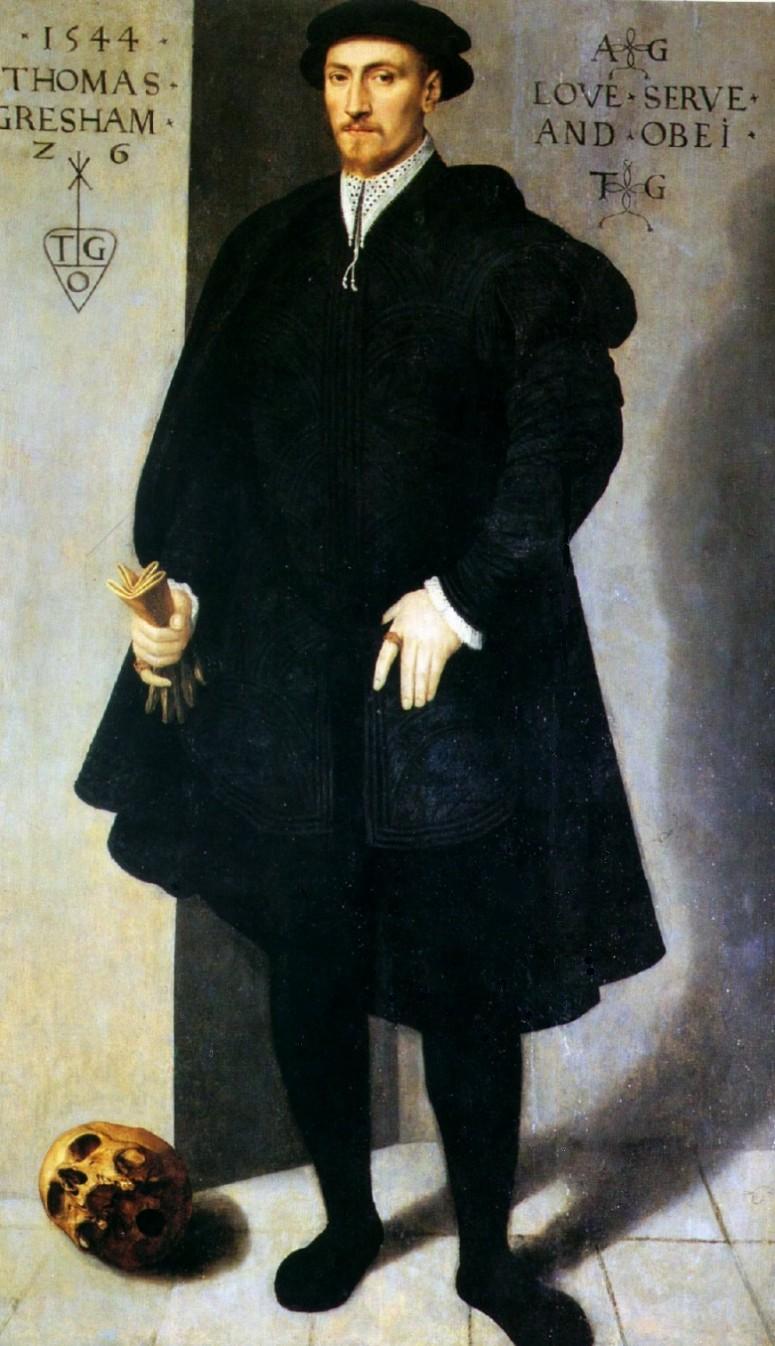
Yesterday, I was at the wonderful Gresham College for a seminar on housing – I posted some highlights earlier. But here’s a lightly edited version of my talk.
It explores the risks posed by the UK’s partially deflated housing bubble and sets out some radical options for reform (elucidated in more detail in the Long Finance paper from the talk is drawn).
And for those of you don’t know Gresham, I recommend Michael Mainelli’s brief history…
Sir Thomas Gresham (1519 to 1579) traded cloth and linens between England and the Low Countries at a time when Cambridge and Oxford had a duopolistic hold on higher education in England. A Cambridge man himself (Caius College), if Gresham’s skippers had visited an Oxbridge College they would, at best, have had the door of a college opened to them and then been laughed at in Latin for their ignorance.
If you’re going to backstab some one properly, do it from the front. Sir Thomas died of apoplexy in 1579 bequeathing one moiety of the Royal Exchange to the Corporation of London and the other moiety to the Mercers’ Company, charging them with the nomination of seven Professors to lecture in Astronomy, Divinity, Geometry, Law, Music, Physic and Rhetoric. He required the lectures to be in Latin and, horror horribilis, English. In effect, Sir Thomas, who pursued monopolies himself, used his will of 1575 anti-monopolistically to crack the Oxbridge oligopoly by bribing seven professors to give lectures to the public, in English.
Gresham College is about ‘new learning’. Sir Thomas felt strongly that the ‘new learning’ should be available to those who worked – merchants, tradesmen and ships’ navigators – rather than solely gentlemen scholars. In the 17th century, the Royal Society was founded to explore “natural philosophy”, new learning through experimentation. So, it is no surprise that the Royal Society was founded and housed at Gresham College for half a century (1660 to 1710) and numbered among its associates Gresham Professors Petty, Boyle and Evelyn.
Just how did this ridiculous competition between right and left to pose as a victim become so tediously commonplace?
Take this pathetic drivel from Iain Martin, the Deputy Editor of the Wall Street Journal Europe, headlined Will the Left Be Generous on Passing of Thatcher?
Rightly it’s heartfelt tributes all round to Michael Foot. He was, as Michael Gove remarked on the Daily Politics, a great British patriot…
But it does make one wonder whether the left will be generous with its tributes to Margaret Thatcher when, as it must eventually, that sad day comes? You only need to ask the question to know the answer.
For a start – ‘passing’ is what you do with wind. People die. And who cares if some people are nasty about Maggie when she dies? She was the Iron Lady, not some porcelain idol. Her record – for good or ill – will speak for itself.