by David Steven | Mar 31, 2010 | Economics and development, Global Dashboard, Global system
[youtube]http://www.youtube.com/watch?v=AA0mFjJbNH8[/youtube]
It’s commonplace to describe the financial crisis as a once-in-a-century event, but I question whether that is the case. Perhaps we’re not in the midst of a short-lived financial shock, but a long crisis that stretches back into the 1990s.
Here’s Paul Blustein on Alan Greenspan:
The Fed chief told the G-7 that in almost fifty years of watching the U.S. economy, he had never witnessed anything like the drying up of markets in the previous days and weeks.
Greenspan wasn’t speaking in Autumn 2008 when Lehman’s collapsed, however, but ten years’ earlier in the wake of the spectacular blow-up of Long-Term Capital Management, which lost $4.5 billion almost overnight in what the fund’s principals post-rationalised as a 100-year flood.
Long-Term (with its superbly hubristic name) was brought low by derivatives, just as Lehman’s would be a decade later.
(Robert Rubin, Clinton’s Treasury Secretary, was one of those left picking up the pieces – part of ‘the committee to save the world’, with Greenspan and Larry Summers. Rubin went on to preside over Citigroup as it needed a succession of massively expensive bailouts, when its derivatives tanked in the subprime crisis.)

The proximate cause of Long-Term’s failure was Russia’s Rouble crisis, when the country defaulted on its debt after the IMF refused to mount a second bailout.
The Russian crisis itself came in the midst of a long series of dramatic economic failures that hits the world between 1997 and 1999, mostly in East Asia (Thailand, South Korea, Indonesia etc), but which also battered Brazil and would devastate Argentina in 2002. Blustein again:
Time and again, panics in financial markets proved impervious to the ministrations of the people responsible for global economic policymaking.
IMF bailouts fell flat in one crisis-stricken country after another, with the announcements of enormous international loan packages followed by crashes in currencies and sever economic setbacks that the rescues were supposed to avert.
(more…)
by Mark Weston | Mar 31, 2010 | Africa, Climate and resource scarcity
Business is slow at Dori’s spectacular weekly livestock market. The crowds of turbaned Fulani nomads and bejewelled Bella and Tuareg are as dense and colourful as ever, but although a few goats and sheep change hands, trade in cattle – for so long the stars of the show – has ground to a halt. Huge herds of powerful horned beasts led in from across the Burkinabe Sahel stand uninspected, undisturbed, unsold. Admiring Fula, whose love for cattle can be as intense as their love for their wives, look on wistfully from a distance, not daring to get involved.
‘It’s very hard to sell cows these days because people no longer have the confidence to herd them,’ says a young Fula who is trying in vain to offload some of his ten-strong brood. ‘There’s not enough rain and boreholes are drying out, so keeping a large herd is difficult. Sometimes you have to travel for three or four days to find water. Some animals don’t make it. So it’s risky to buy cattle, for both economic and emotional reasons: you don’t want to see the animals suffer.’
It is not only business that is under pressure. Hunger stalks the towns and villages of northern Burkina Faso. In 2005, a million people needed emergency food relief as the prices of maize and millet doubled. In 2008, riots protesting the high cost of food rocked the country. Poverty in Dori is Dickensian – large gangs of scrawny kids forage for food; toddlers’ stomachs are bloated by kwashiorkor. In the villages, theft from granaries has increased as the contest for food intensifies. ‘Famine has become cyclical,’ says a nurse, adding that last year’s shorter than usual rainy season has left many thousands vulnerable in the coming months as their stocks of grain run out.
Fula and Tuareg cattle herders are especially exposed – they have no tradition of growing crops as they must spend all their time finding pasture for their livestock. To obtain essential carbohydrates, they must buy them, and when crop prices rise in a drought many starve.
The main cause of food insecurity here is population growth. The population of the Dori district has tripled in the past forty years. As well as meaning that water and pasture have to be shared more thinly, this increase has also hastened deforestation and desertification. Wood is the only source of fuel, so more people means fewer trees and a clearer path for the encroaching desert. The Sahara is advancing into the Burkinabe Sahel at a rate of 10cm per year, reducing the land and water available for herding and farming. Periodic conflict breaks out between roaming herders and settled agriculturalists over access to these precious resources.
Climate change, which everyone here blames on the West (‘you caused it, we’re suffering from it,’ is a common and irrefutable accusation) could be the final nail in the coffin of the nomadic herding lifestyle. This year, the harmattan wind which deposits huge clouds of sand from the desert is still blowing, over a month after it normally stops. Rainy seasons are starting later and finishing earlier. The Sahel is expected to be one of the world regions hardest hit by climate change: rainfall could decrease by a quarter in the next eighty years.
Adapting to the increasingly challenging conditions will not be easy. As an older Fula man in the oasis village of Oursi (whose large lake has virtually dried out) explains, ‘People here don’t know how to do commerce, they only know herding.’ He himself used to have forty head of cattle, taking them north to Mali in the dry season and returning to Burkina for the rains, but many died through lack of pasture and water and he is now left with just ten cows. He has been forced to take up a menial job at a campsite to make ends meet, and spends hours sitting and staring into space, dreaming of cattle and long journeys. His peers are moving to the cities, quitting their quiet wanderings for a grim life spent hawking the roaring streets of Ouagadougou.
Back at the market in Dori, the young herder is reluctant to accept the new reality. ‘People are keeping their money in their pocket in the hope that the climate will improve,’ he says, desperation cracking his voice. It is likely to be a long wait.
by Richard Gowan | Mar 30, 2010 | Cooperation and coherence, Economics and development, Europe and Central Asia, Global system, North America

This week, all the big ideas for the future of world order are coming from Frenchmen. Here’s WTO Chief Pascal Lamy speaking in Brussels on how the EU should present itself in future G20 meetings (as recorded by Charlemagne):
“If one European takes the floor on one topic, and then another European takes the floor on the same topic, nobody listens. Nobody listens because either it’s the same thing and it gets boring, or it’s not the same thing and it will not influence the result at the end of the day….So the right solution, if I may, is at least to make sure that they speak with one mouth. Not one voice—one mouth—on each topic on the agenda. That would be a great improvement.”
If plodding Anglo-Saxons find this voice/mouth thing a bit too Gallic for comfort (they’ll be distinguishing the signifier and signified in EU policy next!) it’s really rather elegant: if lots of European leaders insist on going to G20 confabs they should “divvy up the agenda ahead of time, and agree that one leader would speak (and only one) on each topic in the name of the EU”. In New York, meanwhile, President Sarkozy spoke on global governance at Columbia today, forsaking elegance for ambition:
“In the 21st century,” he said, “we cannot afford that only a handful of countries lead the way. India, Africa and Latin America represent 2.5 billion people, but have no permanent seats in the Security Council. On this trip, I am initiating a reform to have permanent members from every region of the world. We need this in order to tackle the global environmental and financial challenges we are facing.”
I’d like to tell you more about Sarkozy’s speech, but (i) he abandoned his prepared text, so we’re still waiting for a full transcript; (ii) almost every account of the event I’ve read so far has focused on how Carla looked. Which was, if you must ask, good.
[Picture credit: Columbia’s Hoot.]
Update [David]: The Telegraph sees a conspiracy in something called asymmetrical translation:
The French version of the binding summit text, agreed on Thursday, used the original words “le gouvernement économique”.
To spare Mr Brown’s feelings, the English text used the more innocuous and less controversial term “economic governance”.
“There is no fundamental difference of view, but rather a sensitivity to certain words which has led to an asymmetrical translation,” remarked the EU president.
by Richard Gowan | Mar 30, 2010 | Conflict and security, East Asia and Pacific, Europe and Central Asia, North America, Off topic
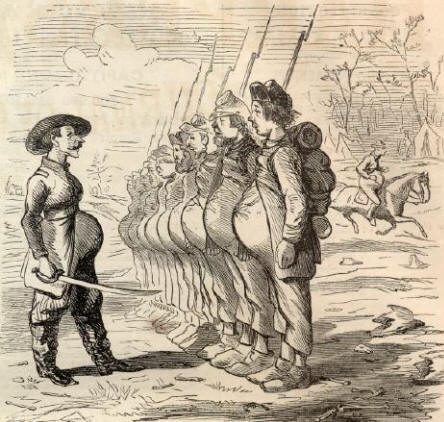
The BBC reports that U.S. forces may soon be slimmer targets for Taliban snipers:
Burger bars and pizza joints in Nato bases across Afghanistan are being closed down in an effort “to increase efficiency across the battlefield”. A Nato spokesman said that “amenities” at bases across the country are being phased out for logistical reasons. He said officials at each base will decide exactly when they are axed.
Nato’s top Afghanistan commander, Gen Stanley McChrystal, made it clear last year that the days of Burger King and Pizza Hut on bases were numbered. He expressed concern that burger bars, pizza restaurants and other stores in large International Security Assistance Force bases at Kandahar, Bagram and Mazar-e-Sharif served as a distraction to the military mission.
That may sound like common sense, but McChrystal’s stand against military obesity may be as doomed as Custer’s against the Sioux. A recent humor piece in the New Yorker drew attention to this remarkable news story from last December:
The latest Army statistics show a stunning 75 percent of military-age youth are ineligible to join the military because they are overweight, can’t pass entrance exams, have dropped out of high school or had run-ins with the law. So many young people between the prime recruiting ages of 17 and 24 cannot meet minimum standards that a group of retired military leaders is calling for more investment in early childhood education to combat the insidious effects of junk food and inadequate education.
“We’ve never had this problem of young people being obese like we have today,” said Gen. John Shalikashvili, former chairman of the Joint Chiefs of Staff. He calls the rising number of youth unfit for duty a matter of national security. “We should be concerned about how this will impact this overstretched Army and its ability to recruit.”
So, are we fated (fatted?) to defeat at the hands of meaner, leaner foes? Not if we choose to pick a fight with China, according to the latest edition of Foreign Policy. It notes that China’s one-child-per-family policy “is widely perceived as creating a generation of spoiled, overweight boys, dubbed ‘little emperors’, who are doted on by four grandparents while their parents toil to support them in fields, factories, and offices.” The result: soldiers who resemble first-year undergraduates!
The [Chinese Army] has found that such soldiers have better communication and computer skills than their peers with siblings. However, they haven’t performed as well in other ways. Only-child recruits are not as tough; they don’t like to go through the pain of intense training; they call in sick more frequently; and they struggle to perform some simple chores like doing their own laundry.
Is this the shape of future war: no more mass armies, just massive soldiers?
[Picture credit: Son of the South.]
