by Alex Evans | Jul 13, 2009 | Economics and development, Global system
Last week’s G8 saw more rumblings of dissatisfaction from China about the US dollar’s continuing role as the world’s reserve currency: State Councillor Dai Bingguo said in a statement to the G8+5 that,
We should have a better system for reserve currency issuance and regulation, so that we can maintain relative stability of major reserve currencies’ exchange rates and promote a diversified and rational international reserve currency system.
This is the latest in a series of such statements from China, building on Wen Jiabao saying he was “worried” about China’s stash of US T-bills in March, central bank governor Zhou Xiaochuan‘s essay on reform of the international monetary system a couple of weeks later, and then China’s $120bn contribution to an Asian emergency currency pool in May – potentially an important step towards an “Asian IMF”.
So if / when the dollar does lose its perch as the world’s reserve currency – something that isn’t likely to happen in the short term, admittedly – then what are the candidates to replace it? (more…)
by Alex Evans | Jul 12, 2009 | UK
The Sunday Times has a piece today on Mark Malloch Brown’s reasons for standing down as a Foreign Office minister – based on detailed quotes from a “colleague”. Excerpts:
“Mark said that the goldfish bowl nature of Westminster and the pressures of the 24-hour news cycle meant there wasa lack of strategic thinking in British politics – on both sides of the political divide. [He] felt there was a contrast between the professionalism and long-term planning that happened in the countries where he acted as a consultant [such as Chile and the Philippines] and the chaotic nature of Whitehall.”
Also this:
Behind the scenes Malloch-Brown tried to lobby Brown to uphold his promise to hold a “comprehensive” inquiry into the Iraq war. However, when last month Brown announced the investigation was to be carried out in secret, Malloch-Brown was furious.
“Mark was incandescent. This was not what why he signed up to being a minister,” said a colleague. “He tried to contact the prime minister, but he was away travelling. In the end he spoke to Gus O’Donnell [the cabinet secretary] and told him what he thought.”
Within days of the prime minister’s original statement, the government executed a U-turn and said that some hearings would after all be held in public. “Mark was satisfied with the final outcome,” said a colleague. “But I think the incident left a sour taste.”
Full article here.
by David Steven | Jul 11, 2009 | What we're watching
[youtube]http://www.youtube.com/watch?v=fD4SjmtQRzM[/youtube]
by David Steven | Jul 10, 2009 | Off topic
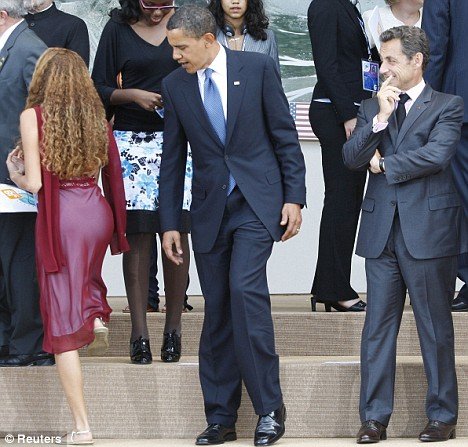
Context that seems to let Obama off the hook here.
Alex adds: well, maybe – but then what about this one?
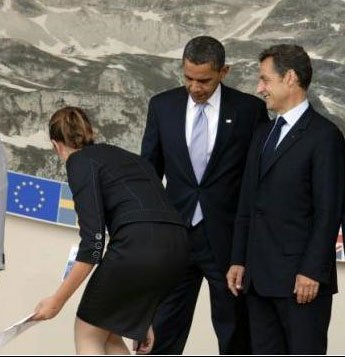
H/t Guido.
by Alex Evans | Jul 10, 2009 | Africa, Economics and development
I think part of what’s hampered advancement in Africa is that for many years we’ve made excuses about corruption or poor governance; that this was somehow the consequence of neo-colonialism, or the West has been oppressive, or racism — I’m not a big — I’m not a believer in excuses.
I’d say I’m probably as knowledgeable about African history as anybody who’s occupied my office. And I can give you chapter and verse on why the colonial maps that were drawn helped to spur on conflict, and the terms of trade that were uneven emerging out of colonialism.
And yet the fact is we’re in 2009. The West and the United States has not been responsible for what’s happened to Zimbabwe’s economy over the last 15 or 20 years. It hasn’t been responsible for some of the disastrous policies that we’ve seen elsewhere in Africa. And I think that it’s very important for African leadership to take responsibility and be held accountable.
– Barack Obama’s take on Africa. (From an interview with AllAfrica.com, reproduced in full on the White House website – worth scanning the whole thing.)
