by Jules Evans | Feb 2, 2009 | Influence and networks, UK
I see my first ever boss, Geordie Greig, has been nominated as the editor of the London Evening Standard by the new owner of the paper, playboy oligarch and former KGB spook, Alexander Lebedev.
I’ve interviewed Lebedev in Moscow. He is a strange man. Not your typical Russian oligarch at all. He’s something of an outsider in Putin’s government, despite having worked as a spy abroad (he was based here in London during the 1980s, and his job was to monitor capital flows from the USSR).
He’s much closer to Gorbachev, and the two own one of Russia’s few independent newspapers, Novaya Gazeta. People were worried Novaya Gazeta would lose its teeth when a KGB man bought it, but no, it still seems full of brave journalists – one of which was gunned down in Moscow in mid-January, while walking with a human rights lawyer.
The thing that struck me about Lebedev was how wowed he was by British society. He enthused about a dinner he was at in London, where he sat between Tom Stoppard and Tom Wolfe. His son Evgeny is even more of a butterfly, and he could be the one in the driving seat at the Standard.
What will be interesting is how the paper will report UK-Russian relations, next time Russia is in the news for some aggressive action (shouldn’t be long now), particularly if it took place in London, like the Litvinenko killing. I don’t think Lebedev would sit by and let the Standard slag off the Kremlin, as one previous editor, Max Hastings, is fond of doing – he referred in passing to Putin as ‘Russia’s chief Mafia capo’ in a Mail article last week. Not sure that would wash with the new proprietor of the Standard.
by David Steven | Feb 2, 2009 | Influence and networks, UK

Wildcat strikes have gone viral in the UK – oil, power and nuclear workers have all walked out and the government is scrambling to get the situation back under control.
No panic buying as yet, but if the strikers push a little harder, we might see signs of a systemic disruption.
Of course, no 4th generation strike would be complete without an online presence – Twitter doesn’t seem to be playing much of a role as yet, but there are a number of bulletin boards out there. Bear Facts is one that’s providing coordination for an otherwise highly distributed action:
This site has been specifically designed for engineering construction workers i.e. Welders, Platers, Erectors, Pipefitters, Mechies, Scaffolders etc for the purpose of improved communication and the sharing of information.
We all know how hard it is to keep in touch with what’s going on in this game when we all work on different sites across the country.
Action is now taking place nationwide. Demonstrations are taking place outside sites from Teeside to Wales. Scottish workers have downed tools and taking part in demonstrations in support. The government is being lobbied by the trade unions, in other words…the gloves are off and the fight is on!!!
Of course, half of those registered on Bear Facts are probably infiltrators (both journalists and spooks) – informal SMS networks are probably carrying most of the sensitive information, as they’re so much more secure.
by Daniel Korski | Feb 2, 2009 | Conflict and security, Europe and Central Asia, UK
Earlier in the week, Charlie talked about the Tories’ weakness on foreign and defense policy. In many ways, he gave voice to a view felt across the British foreign and defence community. That the Tories do not have a serious and detailed set of national security policies that can be turned into government action. The contrast to the Obama administration is stark. The Democratic President has been able to populate his administration with America’s finest foreign policy thinkers, all of whom have thought deeply about what a Democratic foreign policy should look like.
The Tories are not the only ones blame for the dearth of policy thinking. The British system of government militates against party-based subject-mater expertise. Parties are meant to develop the broad strokes of ideas, which will then be developed and implemented by officials if they enter government. It is therefore very difficult for the Opposition to attract experienced foreign policy thinkers. The pay is low and the rewards are not as attractive as in the U.S. The most a future British Prime Minister can offer is junior ministerial portfolio, working to a senior politician whose background may not be well-suited for a security-related job.
But one issue can be parked at the Tories’ door. Having canvassed a wide section of the London-based foreign policy community, the one issue that keeps coming up time and again is the Tories’ euro-scepticism. As one senior (and decidedly euro-sceptic) thinker told me: “The Tories are rowing back on the pragmatic NATO-EU policy that Malcolm Rifkind developed when he was Defence Secretary.” A widely-respected senior military commander told me only two days ago: “It’s as if a veil descends across their faces when Europe comes up. They don’t even want to engage. But this is not about a European army; it’s about being able to work with allies.”
(more…)
by David Steven | Feb 2, 2009 | Economics and development, Global system, London Summit
The G20 London Summit in April will be Barack Obama’s first trip to Europe. The Canadians get him first (apparently this is traditional), while the Japanese (who see the G20 as an evil plot to dilute their influence) are hoping for a sneaky bilateral before the big G20 powwow.
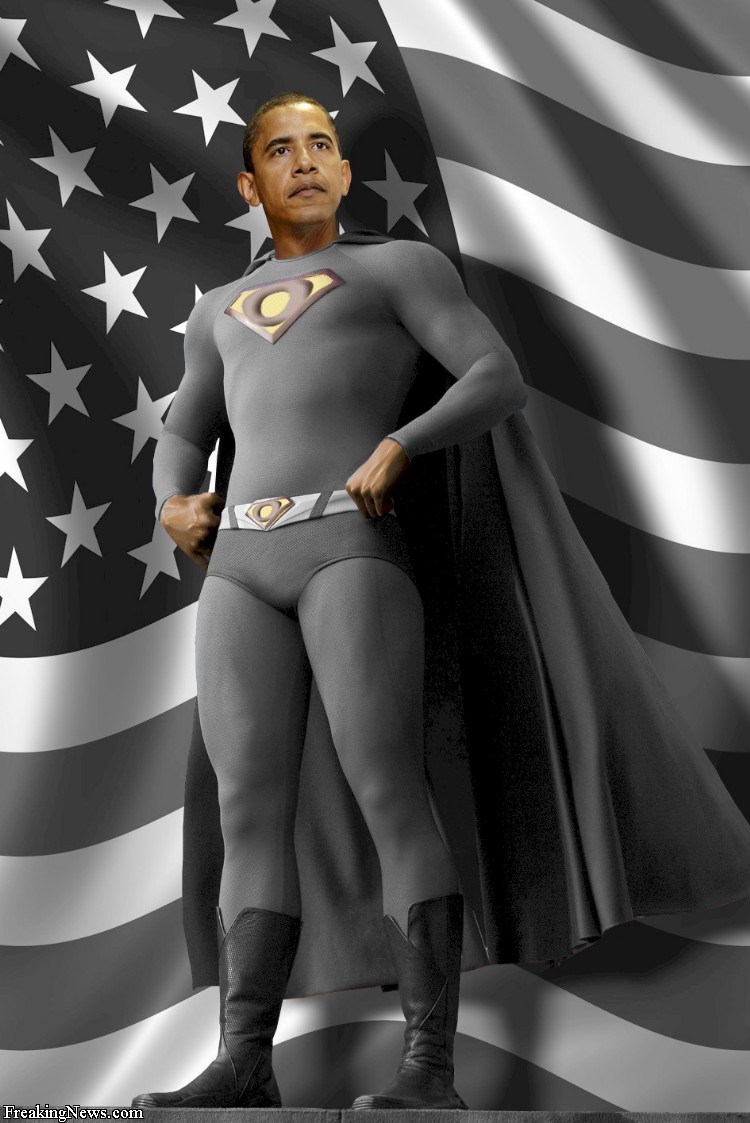
But London will be the big one. Gordon Brown – tired of saving the world on his lonesome – will slip into the role of Robin. Obama will play Batman and kick the world back into shape. The role of Joker is yet to be cast.
But will the summit be a success? The British PM has a lot riding on it, and not just because he believes he can use the event to transform his electoral prospects. We’re in the midst of “the first financial crisis of the global age,” he says, and the best solution is try to bind all the key global issues (economy, trade, climate change, energy, development etc) into a new vision for a “global society”.
“This is not like the thirties,” Brown told a Davos audience (slightly plaintively, perhaps). “The world can come together.” But will it? And more to the point, will Obama reserve sufficient bandwidth to global coordination? Or will he be sucked into further America First policies, as the mess at home hoovers up a growing proportion of his time, energy and political capital?
The past does not dictate the present of course, but the historical precedents are not so good. The nearest equivalent to the London Summit in the thirties was World Monetary and Economic Conference, which was held in the summer of 1933.
This meeting, which bought 66 countries together in last ditch attempt to trigger global economic recovery, was derailed by a new US President – Franklin D Roosevelt – who had recently been elected in a landslide. Roosevelt rejected a compromise deal that had been hammered out by his own delegation.
The result was humiliation for a weakened British Prime Minister, and a furious reaction from the other European nations, led predictably enough by the French. The Germans, meanwhile, were left out on a limb. Hitler – just settling in as Chancellor – was forced to disown his Economic Minister mid-summit. It was an early setback for him on the international stage.
(more…)
by Richard Gowan | Feb 2, 2009 | Africa, Conflict and security, Cooperation and coherence, Middle East and North Africa
News from Lebanon:
BEIRUT: Poland has said it may withdraw its troops from the United Nations Interim Force in Lebanon (UNIFIL), prompting fears of a “crunch” in international peacekeeping resources as governments slash spending in the face of the global financial crisis. Polish Prime Minister Donald Tusk said Saturday that his government would “certainly take a decision” this year on the continued presence of almost 500 troops that the country contributes to UNIFIL.
Last month Poland announced it would cut its contribution to a peacekeeping force in Chad in a bid to save money. “We will consider whether it makes sense to continue certain foreign missions,” Tusk said.
His comments come as his government announced it is cutting spending by almost $5 billion as the global economic crisis deepens, and there are fears that other countries could follow suit and seek to save money by withdrawing troops from expensive overseas peacekeeping missions.
Last week France announced cuts in such missions around the world, including the withdrawal of two naval vessels from UNIFIL’s maritime contingent, which patrols Lebanese waters to prevent arms smuggling into the country by sea.
The problem stems from the way the countries are reimbursed for the peacekeepers they provide. The UN offers a fixed amount for each solider that a country contributes to a peacekeeping mission, regardless of how much it costs the country to pay the soldier.
The system means that poorer countries are able to contribute troops without cost to their domestic budget. But in richer countries, where soldiers earn more than the UN’s reimbursement, national governments are footing the bill for contributing troops to the missions.
On this reckoning, the financial crisis means that the West will increasingly demand that poor countries take on peacekeeping – more UN and AU missions, then, and less from NATO. Poor governments may well respond with enthusiasm, as UN subsidies will help keep their generals happy. Peace operations will remain low-tech and dogged by fights between “those who pay” and “those who play”… Not a happy picture.