by Jules Evans | Dec 5, 2008 | Global system
I’ve covered eastern European markets for about eight years, and all of those eight years, the region has been on a growth trajectory, either because it is converging with the EU, or, in the case of Russia and Kazakhstan, because it has lots of natural resources. It’s been a boom region, with GDP growth averaging above 6% for the last eight years.
In the last two months, the region has been hit by the global financial crisis, and engulfed by it. Now, many analysts say that of all the emerging markets, the CEE (central and eastern Europe) region is the most vulnerable and exposed.
The main reason is that several CEE countries have very high current account deficits, which mean that they rely on FDI to get foreign currency to pay off their FX liabilities. Countries with current account deficits over 5% include Hungary, Ukraine, all the Baltics, Romania, Bulgaria, and Serbia.
The FDI that used to flow to these countries was mainly foreign currency loans – syndicated loans from western banks, or Eurobond borrowing. But the credit markets have completely closed. Now these countries are facing real difficulties in meeting the FX gap, and their currencies are coming under severe pressure.
All these countries have banking sectors that are dominated by western banks. These banks have high levels of foreign currency loan exposure to CEE countries. They want to stop the CEE countries from devaluing, because then their foreign currency loans would be worthless, and some of the foreign banks might even go bust.
However, the CEE countries I mentioned earlier might be forced to devaluate sharply in 2009, because their economies are now grinding into severe recessions, with economies shrinking by up to 4% next year. In the words of one analyst ‘they will have to devalue, otherwise their economic systems might break’.
Another analyst told me, ‘Next year for the CEE region will be like 1998 for the Asian economies. A number of currency collapses and severe recessions.’
The western banks that are heavily involved in the CEE region are desperately trying to prevent an Asia style crisis happening within the EU. Those banks are mainly Austrian (Raiffeisen, Erste Bank, Bank Austria Creditanstalt), but also Italian (Unicredit, which owns Bank Austria) and French (Societe Generale, BNP Paribas).
A senior banker at Unicredit, which is the biggest bank in the CEE region, told me: ‘We have about six months to stop the region from imploding. The EU and ECB need to do more. So far they have felt, it is not in the eurozone, it is not our business. But if there is a crisis in eastern Europe, it will affect western banks, and then it will affect western Europe.’
He also told me there was the real threat of nationalism in eastern Europe, with foreign banks being nationalised for not lending more to CEE economies.
The international financial system is straining, because it depends on international banks, on banks acting as bridges between countries. Now, however, both sides of those bridges are crumbling – western governments are demanding that semi-nationalised banks do more at home; while eastern governments are demanding they support their foreign subsidiaries. It is difficult to obey both.
If the CEE region did collapse, it could put great strain on the local political systems in these countries, and could give rise to isolationist, xenophobic governments, as it did in some CEE countries in the early 1990s. We should remember that the last time there was a major Austrian / CEE banking collapse was in 1931, with the fall of Creditanstalt, which helped give rise to the Nazi Party.
The EU should have the firepower to stop such a crisis from happening – the Baltic and Balkan economies are not that big. The EU or ECB may need to provide major bail-outs or guarantees to the local CEE banking system, in order to help local banks raise credit. Otherwise we are faced with an asymmetric bail-out, where western banking is guaranteed and eastern banking is left to rot.
Another pressing question is what happens in Ukraine, which looks set for a serious devaluation in the new year, and which is now struggling to pay its debts for Russian gas. Much of the EU depends on the gas that comes through Ukraine from Russia, so the EU needs to make sure its supply is protected there.
by Charlie Edwards | Dec 5, 2008 | Conflict and security, Cooperation and coherence, Influence and networks
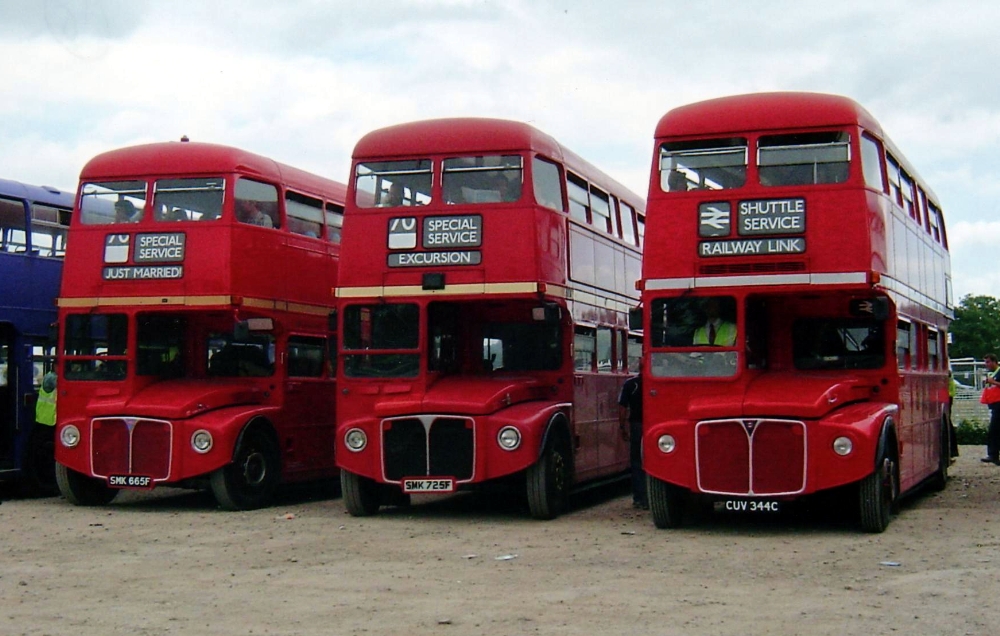
National Security Strategies, it seems, are like London Buses: You wait for ages for one and then three turn up at once. In March of this year the UK Government published Security in an Interdependent World. A few months later, the French President Nicolas Sarkozy unveiled the snappily titled French White Paper on defence and national security (pdf). This week it was the turn of the Australian Prime Minister, Kevin Rudd, to outline his Government’s national security strategy.
While each of the three strategies are important in their own right; reflecting the approach, culture and system of the British, French and Australian governments, it is the commonality of approach and their shared awareness of the security environment that is far more significant.
When the British Government published the UKNSS, politicians and officials were quick to remark that the strategy was a ‘first iteration’, and would be updated annually (led by the new National Security Secretariat in the Cabinet Office). Whereas the UKNSS adopted a very conceptual approach, the French document went into more detail, reflecting both the scale of work necessary to make the French Government more joined-up but also a desire to identify what capabilities and resources were necessary to achieve this. In doing the docuement identified five basic strategic functions that would, in combination, allow them to achieve our overall national security:
– knowledge and anticipation
– prevention
– deterrence
– protection
– intervention
While the British Government might claim that they too had identified these functions the difference was in the level of detail that matters – an indication perhaps that, for the British Government, that power and resources would remain within departments and not in the Cabinet Office. Not to be beaten Kevin Rudd has gone several steps further. Not content with grandiose statements and meaningless rhetoric Rudd wants action. The Australian National Security Strategy:
‘Provides context for the Defence White Paper, which will detail the way forward for our defence over the next twenty years. It will inform a regular Foreign Policy Statement to the Parliament. It will shape the upcoming Counter-Terrorism White Paper. As well as guide the development of the Government’s first National Energy Security Assessment. It incorporates the recommendations of the Homeland and Border Security Review commissioned by the Government early this year.’
Furthermore, in his statement to Parliament Rudd outlined what the strategy would lead to:
- Duncan Lewis is to become National Security Adviser
- A National Security Statement to Parliament
- A coordinated budget process for national security
- An evaluation mechanism, coordinated by the National Security Adviser. It will consider performance against whole-of-government outcomes in light of the priorities set out in the National Security Statement and help inform future resource allocation.
- A Secretaries Committee on National Security, known as SCNS
- A Crisis Coordination Centre (similar to UK COBRA)
Over on The Interpreter, the Lowy Institute’s excellent blog, the AusNSS has been met with a mixture of consternation, disappointment and just a whiff of optimism.
by Mark Weston | Dec 5, 2008 | Africa, Conflict and security
Somalia’s piracy is not just good news for the pirates themselves. Whole industries are springing up or expanding to take advantage of the bonanza.
In the town of Eyl, the pirates’ main base, where hundreds of foreign hostages are being held, new restaurants have opened to serve non-Somali food to the captives. Money changers, property developers and Land Rover dealers are doing a roaring trade as the pirates seek to invest their cash. And firms elsewhere in Africa and in the Middle East have spotted an opportunity for a quick buck by helping out with the payment system. Pirates want hard cash, not bank transfers, because getting the money from banks is slow and well-connected warlords can plunder it. So the ransoms have to be taken directly to the ships. This, however, increases the cost and the danger. As a security expert interviewed by the Sunday Times explains: “There have been attacks by other pirates on the way in [to deliver the ransom].” Air drop, he says, is safer, and “there are firms doing it out of Dubai and Mombasa.”
Smaller businesses are thriving too. Selling $3 cups of tea on credit to pirates before they brave the high seas is making life a little easier for a young mother in Eyl. Her clients pay her when they receive the ransoms. “If it wasn’t for them,” she told a Reuters reporter, “I wouldn’t be able to make a living.”
by David Steven | Dec 5, 2008 | Climate and resource scarcity
What’s striking about the climate talks in Poznan is that (some) developed countries want a long-term goal, while (most) developing countries are only prepared to talk about the next few years. Here’s Xinhua:
The developed countries are seeking to set up a shared vision on long-term goal for emission cuts, saying that such a goal will set the direction for future actions.
Some industrialized countries believe that a 50-percent cut of emissions against the 1990 level by 2050 is necessary for the goal of preventing rising temperatures.
The developing nations, however, rejected such a global goal at this stage, arguing that such a vision is not feasible since there are no concrete plans for providing finance and technology required by the developing countries.
But really, it should be the other way round. Given that:
- A limited emissions ‘cake’ is available between now and, say, 2050 (assuming an eventual attempt to stablize atmospheric GHG concentrations).
- And that rich countries are consuming disportionate shares of that cake on every year.
- Then poor countries are likely to receive a smaller slice the longer it takes to start negotiating a comprehensive allocation.
Short term deals (Kyoto, Kyoto 2, Kyoto 3 etc) suit developed countries. A full-term deal would allow developing countries to understand then try and protect their long-term interests…
by Mark Weston | Dec 5, 2008 | Africa, Conflict and security
In a short but fascinating interview with the Guardian, a Somali pirate explains how he began his career:
I started to hijack these fishing boats in 1998. I did not have any special training but was not afraid. For our first captured ship we got $300,000.
Now you and I might go and splurge such a windfall on wine, women and song, but not this guy. In an impressively entrepreneurial display of business planning, he went out and bought AK-47s and small speedboats. Since then, he has captured a further 60 ships. He continues:
We give priority to ships from Europe because we get bigger ransoms. To get their attention we shoot near the ship. If it does not stop we use a rope ladder to get on board…After checking the cargo we ask the captain to phone the owner and say that we have seized the ship and will keep it until the ransom is paid. When the money is delivered to our ship we count the dollars and let the hostages go.
The 42-year old father of nine goes on to mount an interesting justification for his actions. He started off as a humble fisherman, he says, but was pushed into piracy by greedy foreign competitors:
At sea foreign fishing vessels often confronted us. Some had no licence, others had permission from the Puntland authorities but did not want us there to compete. They would destroy our boats and force us to flee for our lives.
He and his fellow buccaneers consider themselves “heroes running away from poverty.” What’s more, in a country with no government to police the seas (and a world where Egypt makes nearly $5 billion a year from policing the Suez Canal), “taxing” foreign vessels is only fair:
We don’t see the hijacking as a criminal act but as a road tax because we have no central government to control our sea. We will not stop until we have a central government that can control our sea.
H/T Chris Blattman.
