by Alex Evans | Apr 25, 2008 | Influence and networks, UK
A civil servant friend told me yesterday that the Cabinet Office has just issued guidance that all senior civil servants (that’s deputy directors and upwards) are now allowed to blog, publicly, in their own names, about the issues that they work on.
Fascinating if so – but not surprising, given the approach being signalled by Tom Watson, the Minister for Transformational Government. Here’s a speech he did at the end of last month on information and government, which is required reading (a minister who’s heard of Clay Shirky! swoon!).
(There’s also an amusing anecdote in it about him making a speech in which he observes of open source that “One, nobody owns it. Two, everybody uses it. And three, anyone can improve it.” – whereupon
Two days later a political opponent sent out an email laying claim that in fact they are the ‘owners’ of these new ideas. I was accused of plundering policies from the Conservatives.
The irony that laying claim to the ownership of a policy on open source was lost to the poor researcher who had spent a day dissecting the speech. He’d been able to do so easily because it was freely available on my blog, a simple tool used for communicating information quickly and at nearly zero cost without the requirement to charge for access.)
But back to the intriguing question of blogging officials. How would it all work? Watson has posted a first stab at some principles on his own blog – here they are:
1. Write as yourself
2. Own your own content
3. Be nice
4. Keep secrets
5. No anonymous comments
6. Remember the civil service code
7. Got a problem? Talk to your boss
8. Stop it if we say so
9. Be the authority in your specialist field – provide worthwhile information
10. Think about consequences
11. Media interest? Tell your boss
12. Correct your own mistakes
…which, as people in the comments section of his blog generally agree, seem like not a bad starting point.
by Alex Evans | Apr 24, 2008 | Climate and resource scarcity
Here’s a CNN interview I did at an unholy hour this morning on rising food prices. Some of the cutaway footage they’ve spliced in is truly random. One shot shows someone (in Africa, as far as we can tell) looking with concern at a crack in the wall of his hut. Er…
by Charlie Edwards | Apr 24, 2008 | Africa, Off topic
The Conservative foreign affairs spokesman William Hague issued a press release on Tuesday calling on David Miliband, foreign secretary “to take urgent action with regard to the Chinese ship, currently heading to Uganda carrying arms bound for Zimbabwe”.
From the FT blog:
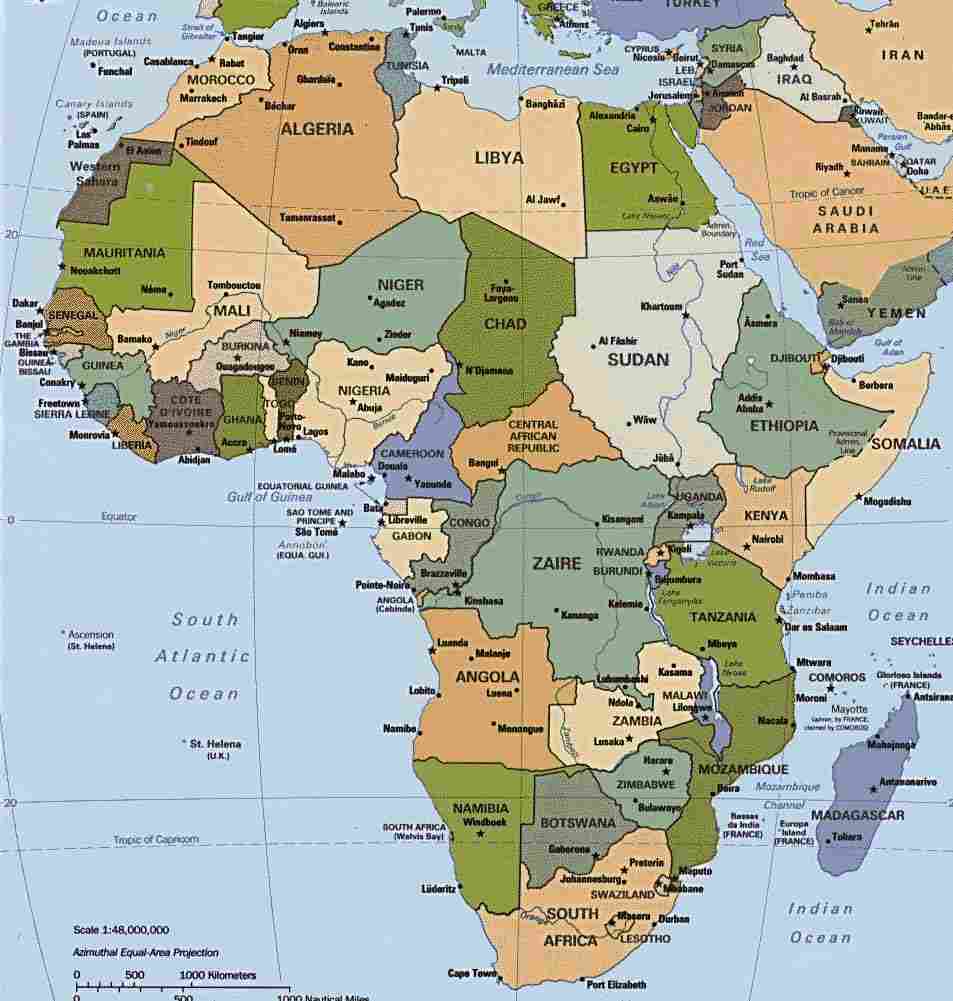
Hague’s intervention sent the Foreign Office into a spin, as officials pored over atlases trying to work out how the Chinese vessel might achieve the unlikely task of offloading its weapons in a land-locked country in the heart of Africa. Perhaps he envisaged the ship heading up to the Mediterranean, taking a right turn down the River Nile and then making the tortuous journey through sub-Saharan Africa to Lake Victoria. Not sure whether the river is up to taking ocean-going ships though. “What is he talking about?” asked one government official. So far there has been no explanation from Mr Hague’s team about this strange Ugandan affair
Aware that readers of Global Dashboard are an imaginative, thoughtful and pragmatic bunch we want to know how you would best transport the shipment of arms onboard the Chinese ship An Yue Jiang from is current position (off the South Western coast of Africa via Uganda to Zimbabwe). A small prize will be awarded for the best post.*
* Very small…
by Charlie Edwards | Apr 24, 2008 | Influence and networks, UK
PR week, the gossip-laden magazine for political apparatchiks and comms people will no doubt set tongues wagging with their latest installment of Brown baiting. According to the mag rag:
Hordes of senior Labour special advisers are said to be passing their CVs to headhunters and recruitment consultants amid concern that their stock is falling. With Gordon Brown’s poll ratings plummeting, many Labour aides are now understood to be enquiring about roles at PR consultancies and large companies. A September cabinet reshuffle is also on the cards.
Full marks to Ros Kindersley (a PR Manager) for stirring the cauldron of uncertainty:
The political climate is changing, and whenever there’s a change in the political climate we get enquiries. More people are open to moving. It’s been across the board, including people in the top ranks.’
So which Special Advisers (SpAds) do people most want? (according to PR week and people they know)
- Geoffrey Norris who is residing at No.10 (business and economic adviser)
- Alan Johnson’s special adviser Mario Dunne is also said to be in demand,
- Des Brown’s special adviser and former Number 10 director of political operations John McTernan .
- John Hutton’s special advisers John Williams and John Woodcock are also being eyed by PR consultancies.
Stir, stir, stir…
by Daniel Korski | Apr 23, 2008 | Conflict and security, Influence and networks, Middle East and North Africa
Today American Defence Secretary Robert Gates recommended that General David Petraeus be appointed head of US Central Command. Until Admiral William Fallon was sacked earlier in the year, the idea had been for General Petraeus to replace General John Craddock as Supreme Allied Commander and help fix the failing mission in Afghanistan, especially after Paddy Ashdown was nixed as UN chief by the Afghan government.
But with Fallon gone and things not altogether stable in Iraq, Afghanistan will have to wait. In Petraeus’ place will be Lt. General Ray Odierno, a mountain-like soldier who served as Petraeus’ no. 2 in Iraq until he was made Deputy Chief of the Army. The top military slot in Iraq had been rumoured to be reserved for Pete Chiarelli, Robert Gates’ Military Adviser, who was described to me as “possessing Petraeus’ intellect but none of his ego.”
In many ways, Petraeus’ move is an obvious one. Nobody knows the Iraq campaign better than Petraeus and the relationship with Odierno has worked before. Paradoxically, it may help restore the formal chain of command, which sees the Iraq commander reporting to the Centcom commander and then to the President (through the SecDef). This chain was famously disrupted because of the close link between President Bush and General Petraeus, which probably caused much of Fallon’s frustration. But will Odierno be given the freedom Petraeus himself had?
What of the persistent rumours that Petraeus will one day enter the political arena? Well, in Flordia he is closer to Washington (and the TV networks). If John McCain wins in November, he’d be a shoe-in for Chairman of the Joint Chiefs. But perhaps the sheen will come off him when he is no longer the sand-covered field commander and everyone will be pilgrimaging to Baghdad to see Odierno. The real loser would seem to be NATO’s Afghan campaign, which would have benefitted from Petraeus’ skills. As Centcom commander he will still oversee the U.S-led, CT-focused Operation Enduring Freedom mission. But the military centre of gravity in Afghanistan is the NATO mission as it’s hard to see how Petraeus can now work his magic from Tampa, Florida.
